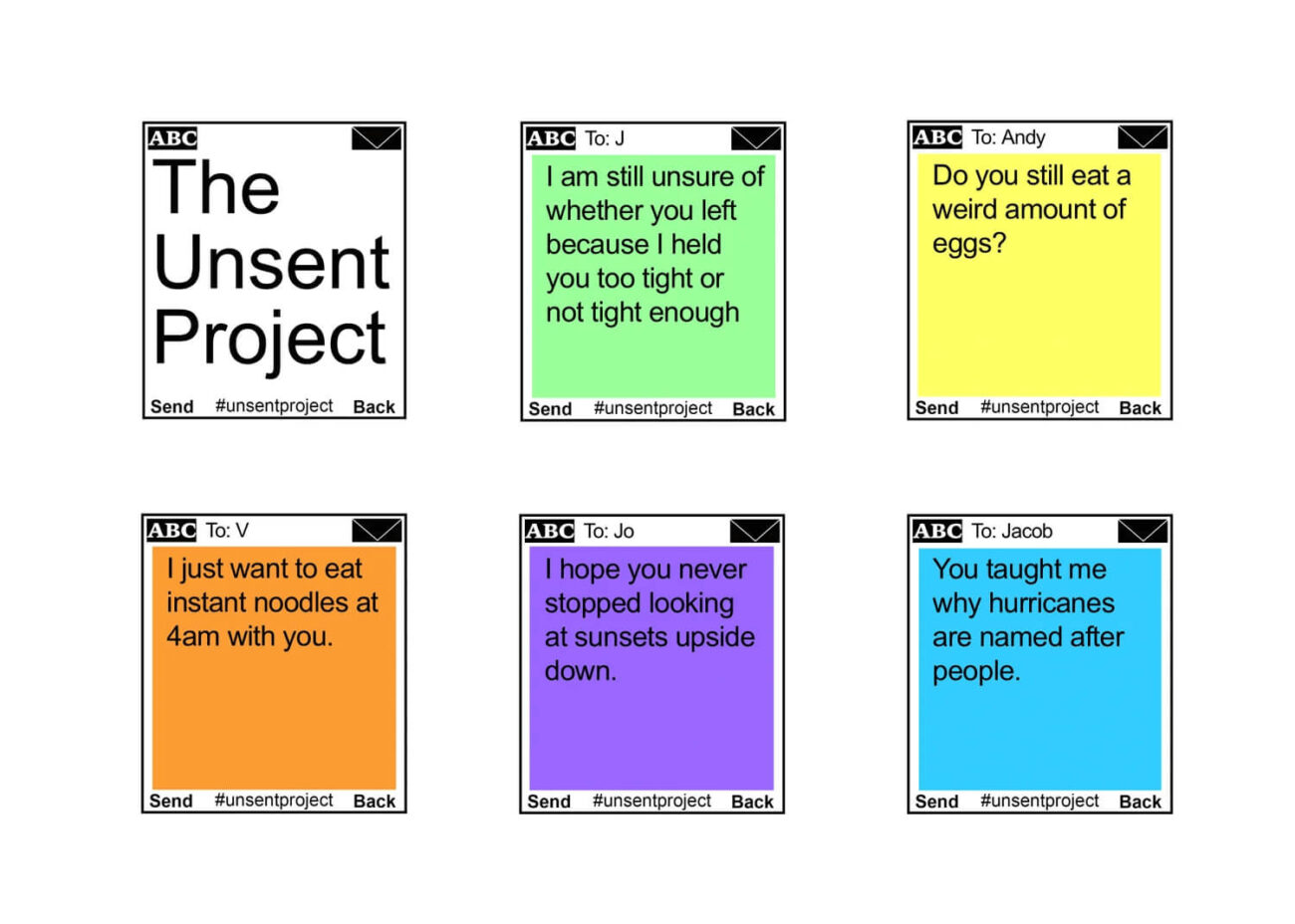
In a world dominated by instant messaging, read receipts, and constant notifications, there is something strangely powerful about words that were never delivered. The Unsent Project captures that quiet emotional intensity. It is a digital art initiative where people anonymously submit text messages they never sent to someone they once loved, lost, hurt, or never confessed to at all.
What began as a creative experiment has evolved into a global emotional archive — a space where vulnerability feels safe, honesty feels raw, and unfinished stories finally find a voice.
What Is The Unsent Project?
The Unsent Project is an ongoing art project founded by Rora Blue. The core idea is simple yet deeply moving: people submit anonymous messages addressed to a first love. Over time, the project expanded beyond first love to include heartbreak, regret, anger, longing, closure, and gratitude.
Each submission is paired with a color chosen by the sender — representing how they associate that emotion with color. The result is a visual and emotional mosaic of human experience.
The project lives primarily online, where thousands of messages are displayed in a searchable format. Visitors can browse messages by name or color, creating an interactive and deeply personal experience.
Why The Unsent Project Resonates With Millions
The success of The Unsent Project isn’t accidental. It taps into universal emotional truths:
1. Everyone Has Unfinished Conversations
Almost everyone carries words they never said. Whether it’s:
- “I miss you.”
- “I’m sorry.”
- “You broke me.”
- “I still love you.”
These unsent messages often remain emotionally heavy. The project offers release without consequence.
2. Anonymity Creates Emotional Freedom
Anonymity removes fear. Without identity attached, people speak honestly. There is no judgment, no rejection, no risk — just expression.
3. It Validates Shared Experiences
When browsing messages, readers often find words that mirror their own feelings. That validation creates comfort. It says, You are not alone.
The Psychology Behind Unsent Messages
Unsent messages are not just romantic leftovers — they’re psychological artifacts.
Emotional Closure
Writing a message without sending it can act as a form of self-therapy. It externalizes internal emotion. Psychologists often recommend journaling for emotional regulation, and this project mirrors that concept in a public yet anonymous format.
The Weight of Regret
Regret is one of the strongest emotional triggers. Research consistently shows that people regret what they didn’t say more than what they did say. The Unsent Project becomes a digital container for that regret.
Memory and Nostalgia
Many submissions reference specific memories — songs, cities, small moments. Nostalgia intensifies emotional recall, which is why browsing the project can feel both comforting and painful at the same time.
The Role of Color in The Unsent Project
One of the most unique elements of The Unsent Project is its use of color.
Each participant selects a color they associate with the person or emotion. This adds a psychological and artistic layer:
- Red often symbolizes passion or anger.
- Blue frequently represents sadness or longing.
- Yellow can indicate warmth or nostalgia.
- Black sometimes expresses grief or emotional heaviness.
The color-coded system transforms simple text into visual emotion. It’s not just what was said — it’s how it felt.
Is The Unsent Project Only About Romance?
While originally centered on first love, the project has grown far beyond romantic relationships. Messages now include:
- Letters to parents
- Notes to childhood friends
- Words to ex-partners
- Confessions to secret crushes
- Messages to people who passed away
- Apologies never spoken
This expansion reflects the complexity of human relationships. Love isn’t limited to romance — and neither is regret.
Social Media and Viral Growth
The Unsent Project gained massive traction through platforms like Instagram and TikTok, where short, emotionally intense messages are highly shareable.
A single line such as:
“I pretended I didn’t care because I was scared you didn’t.”
can resonate with millions in seconds.
The combination of:
- Short-form vulnerability
- Relatable heartbreak
- Anonymous storytelling
- Aesthetic color presentation
makes it perfectly suited for modern digital culture.
The Healing Aspect: Does It Actually Help?
While it’s not a replacement for therapy, many people report emotional relief after submitting a message.
Writing something you never had the courage to send:
- Releases internal tension
- Reduces rumination
- Provides symbolic closure
- Helps process unresolved feelings
In many ways, it acts like a public diary entry without the exposure of identity.
From personal observation, I once read a submission that mirrored a message I had never sent myself — and it felt unexpectedly therapeutic, like someone else had carried my emotional burden for me.
Criticism and Ethical Questions
No cultural phenomenon is without critique. Some argue that:
- It may encourage emotional fixation rather than closure.
- Re-reading past pain could reopen wounds.
- Anonymity may remove accountability.
However, others counter that emotional expression — even imperfect — is healthier than suppression.
Ultimately, the project reflects reality: humans struggle with communication. Sometimes silence feels safer than vulnerability.
Cultural Impact and Digital Memory
The Unsent Project represents something larger than heartbreak. It’s a reflection of how modern relationships function:
- We text instead of call.
- We type instead of speak.
- We draft messages and delete them.
- We overthink before pressing send.
In this context, unsent messages are symbolic of our generation’s emotional hesitation.
By archiving these silent confessions, the project preserves digital-age vulnerability. It becomes a time capsule of how people love, lose, and long in the 21st century.
Why People Keep Coming Back
Visitors don’t just browse once. They return. Why?
Because emotions evolve.
The message that didn’t make sense last year suddenly feels painfully accurate today. The name you searched once might appear again months later. It becomes interactive storytelling — but the authors are strangers.
There is comfort in knowing that heartbreak is universal. That longing isn’t weakness. That regret is human.
The Unsent Project as Modern Art
Beyond emotion, this is conceptual art.
Rora Blue created more than a website — she created a collective emotional mirror. It blends:
- Visual design
- Human psychology
- Community storytelling
- Digital culture
It challenges traditional art spaces by existing primarily online, accessible to anyone with an internet connection.
This democratization of art aligns perfectly with contemporary creative movements.
Conclusion
The Unsent Project thrives because it captures something timeless: the ache of unfinished sentences.
In a world obsessed with sending, posting, sharing, and broadcasting — it honors hesitation.
It proves that:
- Not all love stories are completed.
- Not all apologies are delivered.
- Not all feelings are confessed.
- And that’s okay.
Sometimes healing doesn’t require a reply.
Sometimes it only requires expression.
And sometimes, the most powerful messages are the ones we never send.
