In the tower of an airport, clarity is the only currency that matters. There is no room for interpretation, no space for “maybe,” and certainly no time for fear. For nearly twenty-five years, Charles Paul Harman has lived in this high-stakes world as an air traffic controller, guiding planes through the invisible highways of the sky, ensuring that every journey ends safely on the ground. It is a career built on precision and the management of sudden changes.
But when the headset comes off and the radar screen fades to black, Harman steps into a different role—one that requires a softer voice and a much bigger heart. Under the pen name Charlie Hart, he is trading flight paths for forest paths, guiding a new generation of travelers through the often-scary skies of childhood.
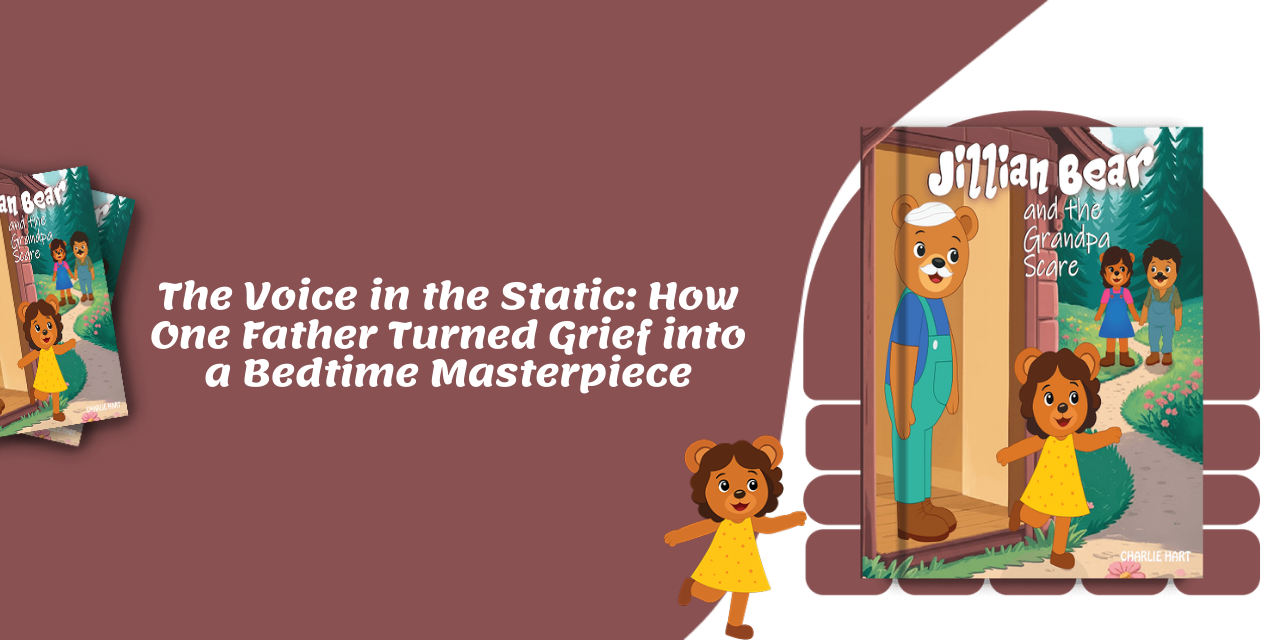
His debut book, Jillian Bear and the Grandpa Scare, is more than just a beautifully illustrated addition to the children’s literary canon. It is a quiet triumph of love over loss, a tool for grandparents to bond with their little ones, and a masterclass in teaching children that change, while terrifying, is often just love in disguise.
The Heartbeat Behind the Bear
To truly appreciate the warmth of Jillian Bear, one must first understand the winter that preceded it. In the author’s biography, you will read about the air traffic controller and the storyteller. But in the dedication, you meet the father.
Hart’s journey to authorship wasn’t born from a desire for fame or a sudden whim. It was born from a profound need to build a bridge. “Once upon a time in another lifetime ago,” Hart shares in a moment of raw vulnerability, “my Gillian changed my life by making me more than just a father. She made me Daddy.”
The “Jillian” of the title is a tribute to Hart’s late daughter. For Hart, this book is not merely a product; it is a vessel. It is a way to introduce his younger children, Joanna and William, to the big sister they never had the chance to meet in this world. By weaving her name into a story of safety, comfort, and family, Hart ensures that Gillian remains a present, guiding force in their lives. It is a sentiment that transforms a simple bedtime story into a legacy of hope, proving that storytelling is one of the few magics we have that can defy time.
A Weekend at Grandma’s: The Universal Setup
The story opens in a setting that radiates security: Grandma and Grandpa Bear’s house. Hart taps into that specific, cozy nostalgia that defines the grandparent-grandchild relationship. Jillian, a “very small bear,” loves visiting her grandparents. She knows the rhythm of their home. She knows the smell of her special blanket.
Most importantly, she knows Grandpa Bear.
Hart paints Grandpa Bear with delightful specificity. He is a “HUGE” bear—a gentle giant with a head of white hair he claims is “wisdom” and a thick white mustache that defines his face. For a child like Jillian, these physical traits are the landmarks of her world. They are as permanent and reliable as the sun coming up.
The conflict of the story is brilliantly domestic. It isn’t a dragon or a storm that frightens Jillian; it is a disruption of the familiar.
The scene is set: Grandma is reading in her chair. Grandpa is “reading” in his chair (which, as Hart wittily notes, “means he was taking a nap with a book on his chest”). Jillian, following suit, drifts off to sleep on the floor. It is a scene of perfect peace.
But when Jillian wakes up, the world has tilted on its axis. Grandma is still there, but the huge bear with the white mustache is gone. In his place stands a stranger—a bear who looks like Grandpa, dresses like Grandpa, but is missing the one thing that made him Grandpa.
He has shaved his mustache.
The “Grandpa Scare”: Why It Matters
To an adult, a shaved face is a mundane grooming choice. To a child, it can be an existential crisis. Hart captures this “Grandpa Scare” with a level of empathy that is rare in children’s literature. He validates the fear. He doesn’t dismiss Jillian’s reaction as silly; he acknowledges that for a child, visual consistency equates to safety.
“This new bear might have been even bigger than Grandpa Bear,” the narration tells us. “What had happened to Grandpa Bear?!?”
In this moment, Hart addresses a universal anxiety: the fear of the unknown. Children are constantly bombarded with changes they cannot control—moving houses, changing schools, new siblings, or even a parent getting a haircut. Jillian Bear and the Grandpa Scare provides a safe space to explore that anxiety. It asks the question: When the outside changes, does the inside change too?
The sensory Solution
The resolution of the story is where Hart’s storytelling shines. He doesn’t resolve the conflict with a long lecture. Instead, he uses the instincts of the bear—and the instincts of the child.
When the “stranger” speaks, he uses a familiar affectionate nickname: “Jilly Bear, you silly bear.” It’s a phrase Grandpa always used when Jillian did something he didn’t understand. The voice is the first clue.
But the clincher is the scent. “Now bears do not have the best eyesight,” Hart writes, “But they do have very good noses.”
Jillian closes her eyes and sniffs. She smells the house. She smells her blanket. And finally, she smells the truth. “SHE SMELLED GRANDPA BEAR!!!”
This moment is the emotional crescendo of the book. It teaches young readers to look past the surface. It serves as a gentle reminder that while people might change their appearance—whether through age, injury, or just a shave—their essence, their “scent” of love, remains immutable.
Grandpa scoops Jillian up in his “ginormous arms,” and the fear dissolves into a hug. The mustache is gone, but the Grandpa is there to stay.
Interactive Healing
Hart understands that children learn best when they are participants, not just observers. In a brilliant move to extend the life of the book, he has included an activity section at the back.
“Now it’s your turn to have fun!” the book invites, offering coloring pages of the scenes the children just read—Jillian dancing, the family washing the car, the bears at the park. By inviting children to “grab your crayons, pencils, or markers,” Hart empowers them to color their own world. It grounds the lesson of the story in creativity, allowing the child to spend more time with Jillian and her family, solidifying the bond.
A Message for the Grown-Ups
While the book is categorized for children, the marketing questionnaire Hart filled out reveals a message targeted squarely at the adults holding the book—specifically the grandparents.
“This book is for grandparents and parents of young children,” Hart notes. It is a tool for connection. In an age of screens and digital distractions, Jillian Bear invites a return to the lap-read, the quiet ten minutes before sleep where memories are made.
Hart’s advice to his readers is as simple as it is profound: “Be kind to the world around you. Love everyone you meet.”
It is a philosophy that seems to permeate his life. Whether he is directing air traffic or writing about bears, Charles Paul Harman is a man focused on safe arrivals. With Jillian Bear and the Grandpa Scare, he has landed a story that is sure to touch the hearts of anyone who has ever needed a hug when the world felt a little too big and a little too strange.
This is a story about a mustache, yes. But really, it is a story about the permanence of love. And for Charlie Hart, writing from the depth of his fatherly heart, that is the only story worth telling.
Jillian Bear and the Grandpa Scare is available now for purchase on Amazon. To learn more about Charlie Hart, his upcoming projects, and the legacy of Jillian, visit his author website at www.charliehartbooks.com.
