

The Way We Buy Tiles Has Changed Forever
Let’s be honest. Choosing tiles has never been easy.
You stand in a showroom staring at dozens of samples. You try to imagine how that glossy marble finish will look across your entire living room. You wonder if the pattern will feel too busy. You second-guess the grout color. And in the end? You delay the decision.
This hesitation is exactly where many tile brands lose sales.
Today’s buyers don’t want to imagine. They want to see. That’s why the modern tile visualizer has become one of the most powerful tools in the home improvement industry. It removes doubt, speeds up decisions, and helps customers feel confident before they purchase.
In this article, we’ll explore how a tile visualizer works, why it’s essential for brands, and how it’s reshaping the customer buying journey.
What Is a Tile Visualizer?
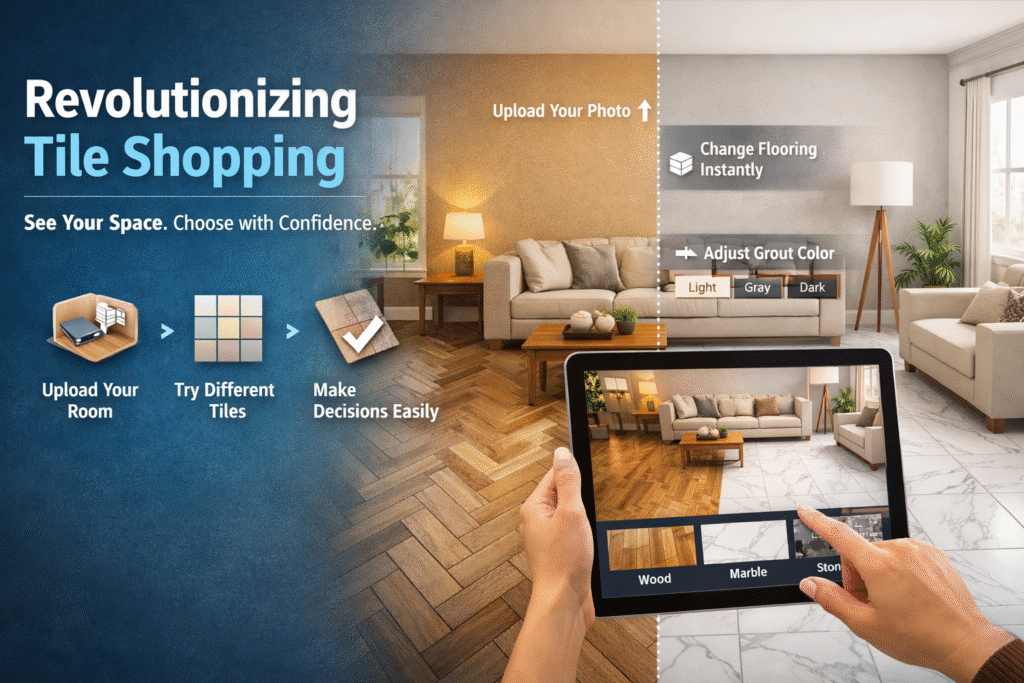
A tile visualizer is an interactive digital tool that allows customers to preview tiles inside a realistic room setting. Instead of looking at small physical samples, users can upload their own room image or select a preset space and instantly see how a tile looks applied across the floor or walls.
This technology simulates:
- True scale placement
- Natural lighting conditions
- Texture and finish (matte, glossy, polished, etc.)
- Layout and pattern alignment
- Grout color customization
The result? A highly realistic digital preview that bridges the gap between imagination and reality.
Why Traditional Tile Selling No Longer Works
Customers Struggle to Visualize
A 12×12 tile sample doesn’t tell the full story. A tile might look elegant in isolation but overwhelming when applied across 500 square feet.
Without a tile visualizer, customers rely on guesswork.
Decision Fatigue Slows Sales
Tile purchases involve multiple decisions:
- Tile size
- Layout pattern
- Grout color
- Finish type
- Room lighting impact
When customers feel uncertain, they delay. And delayed decisions often turn into lost sales.
Online Catalogs Aren’t Enough
Even high-quality product photos don’t solve the problem. Seeing a tile in a styled studio room isn’t the same as seeing it in your own kitchen or bathroom.
This is where a digital tile visualizer becomes a conversion engine rather than just a marketing feature.
How a Tile Visualizer Boosts Conversions
1. Instant Confidence
When customers can see the tile inside their own room, hesitation drops dramatically. They feel ownership over the design.
For example, a homeowner renovating a bathroom uploads a picture of their space. Within seconds, they test three different marble-look tiles. They instantly realize one option complements their vanity perfectly. Decision made.
2. Faster Sales Cycles
Dealers and sales teams often spend hours explaining how a tile might look. With a tile visualizer, customers can explore variations themselves.
This reduces:
- Repeated showroom visits
- Long consultation cycles
- Back-and-forth indecision
Brands report noticeably shorter closing times when customers use visualization tools.
3. Higher Average Order Value
When buyers see premium tiles in a realistic preview, they are more likely to upgrade.
A customer who originally considered a basic matte finish might switch to a high-end polished option after seeing how luxurious it appears in a realistic setting.
Visualization drives aspiration.
Key Features That Make a Tile Visualizer Effective
Not all tools are equal. A high-quality tile visualizer should include:
True-Scale Placement
Tiles must be displayed in accurate proportions. Oversized or distorted visuals destroy trust.
Realistic Lighting Simulation
A tile looks very different in warm indoor lighting versus bright daylight. Accurate lighting simulation enhances credibility.
Layout & Grout Customization
Customers should be able to experiment with:
- Herringbone patterns
- Staggered layouts
- Different grout shades
This level of control increases engagement and time spent on the website.
High-Resolution Texture Rendering
The texture of stone, ceramic, or porcelain must feel authentic. Flat, artificial overlays won’t convert serious buyers.
Solutions like Nirwana.ai focus heavily on realism and surface accuracy to ensure brands present their products in the best possible way.
Real-World Example: From Browsing to Buying
Imagine a tile brand launching a new wood-look porcelain collection.
Without a tile visualizer:
- Customers scroll through static product images.
- They save a few screenshots.
- They visit competitors.
- They delay the purchase.
With a tile visualizer:
- Customers upload their living room image.
- They test multiple plank sizes instantly.
- They compare light oak versus dark walnut.
- They share the preview with family for approval.
The tool becomes part of their decision-making process. The brand becomes part of their home story.
That emotional connection matters.
Why Tile Brands Are Investing in Visualization Technology
E-commerce Is Growing
More customers research and shortlist products online before visiting showrooms. A tile visualizer transforms a passive browsing experience into an interactive one.
Dealers Want Digital Tools
Showroom staff can use visualization tools during consultations to close deals faster. Instead of explaining possibilities, they show them.
Competitive Differentiation
In a crowded market, brands offering advanced visualization instantly stand out as modern and customer-centric.
Companies like Nirwana.ai are helping tile brands integrate AI-powered visualization directly into their websites, giving them a strong digital edge.
How a Tile Visualizer Reduces Returns
Returns are costly. They happen when expectations don’t match reality.
By providing realistic previews:
- Customers know what they’re buying.
- Surprises are minimized.
- Satisfaction increases.
Accurate previews lead to informed purchases, and informed purchases lead to happier customers.
The Psychological Power of “Seeing Before Buying”
Visualization taps into human psychology.
When customers see a tile applied in their own space:
- It feels personalized.
- It feels achievable.
- It feels real.
This mental ownership dramatically increases purchase intent.
A tile visualizer doesn’t just show a product. It helps customers imagine their future home.
That emotional trigger is incredibly powerful.
What the Future Looks Like
The next generation of tile visualizer technology is becoming even smarter:
- AI-powered room detection
- Automatic surface recognition
- Real-time texture adjustments
- Mobile-friendly instant previews
As digital expectations grow, brands that invest in advanced visualization tools will lead the market.
The shift isn’t optional anymore. It’s inevitable.
Final Thoughts
Buying tiles should feel exciting, not stressful.
A modern tile visualizer removes uncertainty, empowers customers, and accelerates sales for brands. It transforms static catalogs into immersive experiences and turns hesitation into confident decisions.
If you’re a tile brand looking to modernize your customer journey, visualization technology is no longer a luxury—it’s a necessity.
The brands that help customers see clearly will be the ones that sell faster.
And that’s a future worth building.
About the Author