


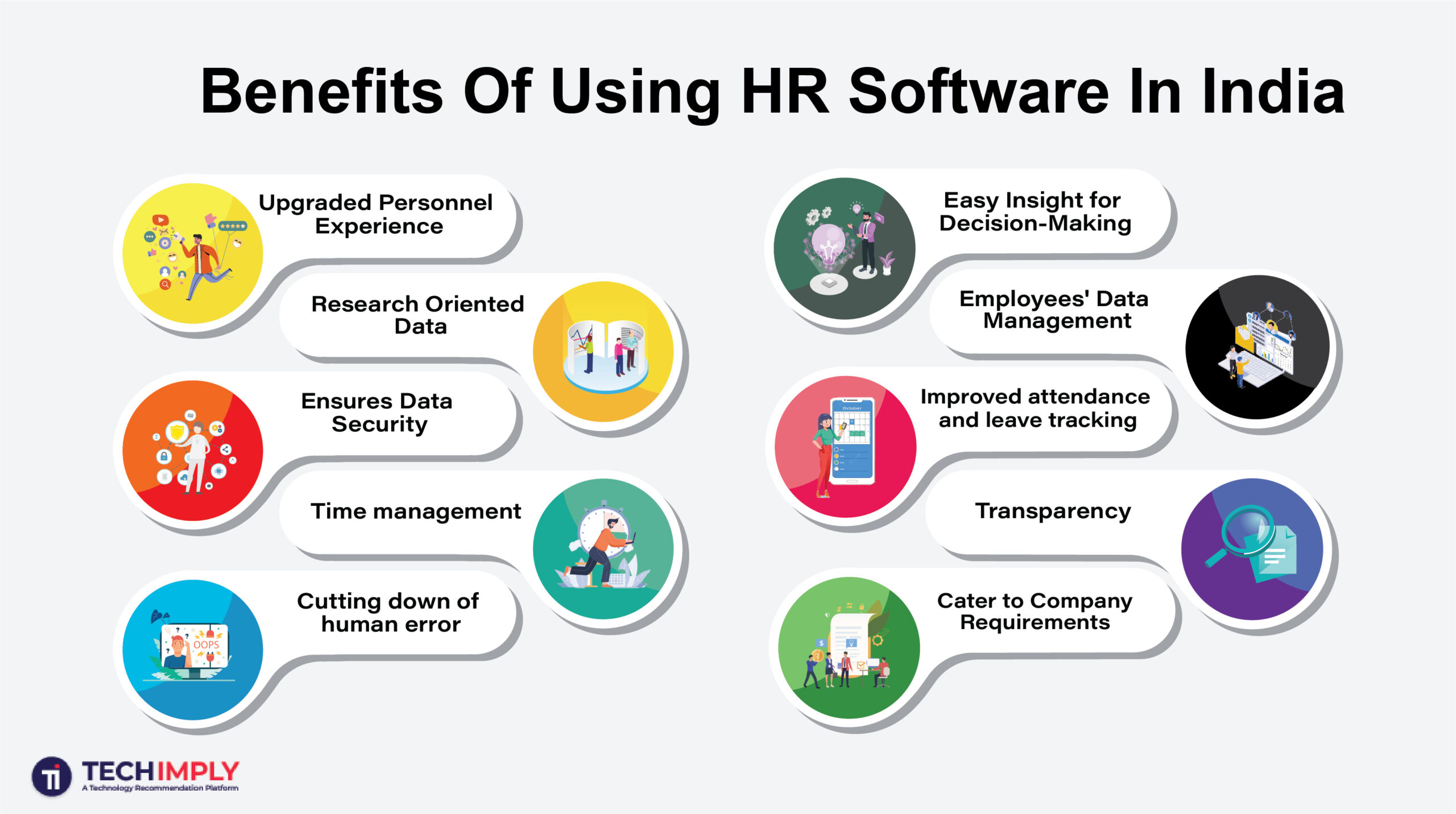
Human Resource (HR) functions have matured massively in India. What used to be stacks of paperwork, manual attendance registers, and complex salary computations are now largely automated. The right HR software can make a big difference — in compliance, productivity, employee satisfaction, and cost control. Below are the top HR software in India, why they are good, what to watch out for, and how to pick among them.
What criteria matter in choosing HR software
Before I jump into the list, here are some key criteria you should consider when evaluating HR software:
- Compliance with Indian laws & statutory requirements — PF, ESIC, TDS, PT, labour laws, etc.
- Payroll automation + accuracy — especially handling deductions, reimbursements, tax calculations, different salary components.
- Ease of use / User experience — for HR team, managers, employees (self-service).
- Modularity & scalability — ability to add modules (attendance, performance, learning, etc.) as you grow.
- Leave & attendance tracking — including mobile / biometric / remote attendance.
- Reporting & analytics — insights into HR metrics.
- Support & security — data protection, cloud or on-premise, uptime, local customer support.
- Cost / affordability — pricing models (per user, per employee, flat rate), hidden costs.
Top HR Software Platforms in India (2025)
Here are some of the strongest, most popular HR software platforms in India. I’ll list ten, then compare them and suggest which may be best in various scenarios.
| # | Software | Key Strengths / Unique Features | Who It’s Best For |
|---|---|---|---|
| 1. Keka HR | Very strong in payroll automation, built for Indian compliance (PF, ESI, TDS etc.), good UI/UX, scalable. | SMEs to mid-sized businesses, those who want to streamline payroll & attendance with growth in mind. | |
| 2. greytHR | Established solution, especially good for statutory compliance, common in India. Core HR + payroll + leave/attendance modules. | Businesses that need reliable compliance, and want stable, proven software. | |
| 3. Zoho People | Part of the Zoho suite (integration with other tools), good UX, many features like time tracking, attendance, leave management, self-service, etc. | Companies already using Zoho tools, or those who want a modular, well-integrated system; small to mid-sized businesses. | |
| 4. Darwinbox | More enterprise-oriented, advanced features (analytics, engagement, AI-powered insights) and strong scalability. | Large enterprises, or businesses with complex HR needs and global / multi-location operations. | |
| 5. HROne | Simplicity + strength in core HR + mobile readiness. Also good usability and adoption. | Businesses looking for something secure, clean, with good mobile access, and don’t need too many bells & whistles yet. | |
| 6. SAP SuccessFactors | Global brand, very broad scope (talent management, workforce planning, analytics etc.), strong enterprise features. | Large companies with international presence or complex HR processes, who need advanced modules and are ready to invest. | |
| 7. ZingHR | All-in-one HCM (hire-to-retire) platform, many modules, mobile-first, employee centric. Good reach. | Medium to large businesses wanting a full suite, or those who want strong employee engagement + lifecycle management. | |
| 8. sumHR | Designed for startups / growing businesses, user-friendly, reasonably priced, modules scaled to needs. | Startups or small companies with limited budgets, wanting to get core HR processes sorted without overpaying. | |
| 9. Pocket HRMS | Strong in payroll, leave & attendance, often used for SMEs; cloud-based, mobile support. | SMEs or small business units who need solid, dependable HRMS without huge complexity. | |
| 10. Kredily | Focused on employee experience, UI/UX, engagement modules; good for companies that want HR software to also contribute to retention & culture. | Businesses placing emphasis on culture, engagement, retention, or wanting tools that go beyond the basics. |
Comparison & How to Choose
To help you decide, here are some comparisons and suggestions depending on specific needs:
| Scenario | Best Picks | Why |
|---|---|---|
| You are a small startup (say, under 50 employees) | sumHR, Zoho People, Pocket HRMS | Lower cost, simpler onboarding, decent core features, less overhead. |
| Growing SMEs with 50–500 employees | Keka, greytHR, ZingHR | They offer more modules, better reporting/analytics, manage compliance well, scalable. |
| Large enterprise or multi-location operations | SAP SuccessFactors, Darwinbox, ZingHR | Can handle complex workflows, global HR policies, advanced analytics, integrations. |
| Need strong statutory / payroll compliance | greytHR, Keka, Pocket HRMS | They are widely recognized in India for handling PF, ESI, PT, TDS etc. |
| Focus on employee engagement / culture | Kredily, ZingHR, Darwinbox | Engagement tools, good UX, more features around feedback, performance, retention. |
| Budget is tight | sumHR, Pocket HRMS, Zoho People | More affordable plans, pay-as-you scale, less cost overhead. |
Advantages & Disadvantages — What to Watch Out For
- Advantages
- Automation reduces manual errors and frees HR teams for strategic tasks.
- Better reporting gives insights (employee turnover, attendance issues, reward/raise decisions).
- Employee self-service improves transparency & satisfaction.
- Cloud solutions mean less infrastructure overhead.
- Disadvantages / Challenges
- Cost can escalate with more modules, more users, more customisation.
- Onboarding / data migration from old systems may be tedious.
- Sometimes lag in support for local (state) labour laws (if software isn’t updated).
- Integration issues (if you use many other tools).
- Security & data privacy must be taken seriously.
What’s New / Trends in 2025
- Usage of AI and analytics in HR: for predictive attrition, engagement scoring, performance trends.
- More mobile-first & remote work features (attendance from remote locations, geo-fencing etc.).
- Employee experience & self-service: onboarding, feedback, kiosks, mobile apps.
- Modular pricing and pay-per-employee models becoming more common.
- Enhanced compliance tracking due to changing labour laws, state-based regulations.
Summary & Recommendation
If I were to make general recommendations:
- For fast-growing startups: Start with a tool like sumHR or Zoho People for core needs (attendance, leave, basic payroll). As you grow, transition to Keka or ZingHR which offer more modules and stronger analytics.
- For established SMEs: greytHR and Pocket HRMS often provide a balance of cost vs features, especially around payroll and compliance.
- For large enterprises: Tools like SAP SuccessFactors, Darwinbox, ZingHR (if extensively configured) make sense. You’ll need robust analytics, global / multi-site feature, strong integrations.
How Recreational Cannabis Stores Work: Rules and Regulations
Remote Bookkeeping Services Australia: The Invisible Engine Behind Modern Businesses
How to Choose the Right Clinic for Nose Surgery in Islamabad
Wie man Knieschmerzen ohne Operation behandelt
Before Filing Mutual Divorce in Delhi: Important Legal Facts Every Couple Must Know (2026 Guide)
About the Author