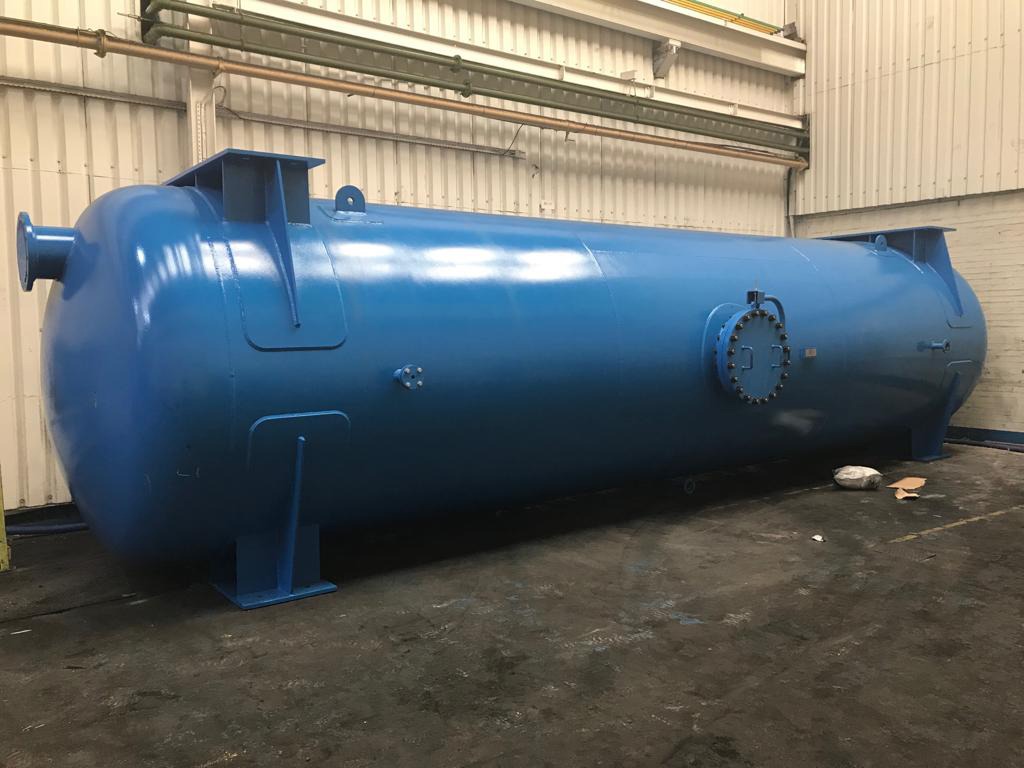
The search for a trusted Air Receiver Manufacturer often starts with questions about pressure ratings, capacities, and local availability. This article focuses on manufacturers serving Tamil Nadu and the wider Indian market, with clear specs, standards, and buying guidance.
TL;DR
- Choose an air received manufacture in India made to IS 2825 or ASME standards with the right capacity and pressure rating for your plant.
- Typical pressures range from 7 kg/cm² to 40 kg/cm² and capacities from 250 L to over 35,000 L.
- Materials are mainly MS (IS 2062), stainless steel, or alloy steel depending on application.
- Local Tamil Nadu manufacturers offer vertical and horizontal designs, customization, and pan-India delivery.
Manufacturing & Specifications
Manufacturers supply air receivers in standard and custom sizes. An air receiver is a pressure vessel that stores compressed air and even pressure pulses. Typical working pressures run from 7 kg/cm² to 40 kg/cm². Capacities commonly span 250 liters to 35,000 liters or more.
Materials used include Mild Steel (MS) to IS 2062, stainless steel, and select alloy steels. MS provides cost efficiency; stainless steel helps corrosion resistance. Connection types typically include flanged and screwed options. Support styles vary: L-type, ring-type, and tubular saddles are common.
Example spec: 1000 L vertical MS air receiver, 10.8 bar working pressure, flanged inlet, safety valve, drain valve.
What are typical pressure ratings and capacities?
Typical ratings start at 7 kg/cm² and go to 40 kg/cm² for many industrial tanks. Low-pressure shop systems often use 7–12 kg/cm². High-pressure applications use 20–40 kg/cm² or higher when specialized designs are required.
Which materials are commonly used?
Mild Steel (IS 2062) is widely used for standard tanks due to cost and weldability. Stainless Steel appears when contamination or corrosion is a concern. Alloy steels serve high-pressure or specialized chemical environments.
Regional Availability
Tamil Nadu hosts several reliable air receiver manufacturers and fabricators. Cities like Chennai, Coimbatore, and Madurai supply industrial tanks and accessories. Many firms provide site surveys, customized design, and delivery across the state.
Manufacturers often ship pan-India and to export markets. Delivery across Tamil Nadu districts is common with proper transport planning. Local fabricators help with on-site installation and orientation checks.
You can view a customizable product range from for sample capacities and pressure options.
Who are the top manufacturers in Tamil Nadu?
Top names vary by niche: high-pressure specialists, large-capacity makers, and custom fabricators. Evaluate vendors by certification, references, and in-state support capabilities. Ask for test certificates and site references before finalizing.
Can I get delivery across all districts?
Yes. Most established manufacturers arrange state-wide delivery. Transport and lifting logistics require coordination for large tanks.
Compliance & Standards
Indian manufacturers follow IS 2825 and may apply ASME codes for export or high-pressure units. IS 2825 sets safety and design norms for unfired pressure vessels in India. ASME Section VIII often governs higher-spec or export products.
Request manufacturer documentation showing compliance to relevant standards. A vendor should provide welding procedures, material test certificates, and hydrostatic test records.
What construction codes apply in India?
IS 2825 is the primary code for unfired pressure vessels. For export or specialized needs, ASME Section VIII is common. Local state rules and factory safety norms also apply.
How do manufacturers ensure safety?
Manufacturers use certified materials, qualified welders, and pressure testing. They add safety valves, pressure gauges, and automatic drains to protect systems.
Product Use & Applications
Air receivers suit many industries across Tamil Nadu. Common users include automotive plants, textiles, pharmaceuticals, food processing, and chemical plants. They stabilize pressure, reduce compressor cycling, and allow moisture separation.
Configurations include vertical and horizontal tanks. Vertical tanks save floor area and suit smaller footprints. Horizontal tanks fit low-height spaces and large capacities.
What industries use air receiver tanks?
Automotive and manufacturing plants are primary users. Other sectors include chemicals, food processing, and textile mills that depend on stable compressed air.
What configurations are available?
Vertical and horizontal designs are standard. Manufacturers also offer skid-mounted and insulated options for special needs.
How to Choose an Air Receiver
Select by capacity, pressure, material, and certifications. Confirm required volume to cover peak demand and compressor duty cycles. Pick material based on corrosion risk and product contact.
Ask for manufacturer test data, warranty terms, and installation support. Compare multiple quotes and request on-site measurements for large tanks.
Maintenance Tips
Regular inspection keeps pressure vessels safe and efficient. Drain condensate daily and check safety valves monthly. Schedule annual internal inspections and follow the manufacturer’s test plan.
Keep records of pressure tests, repairs, and painting. Preventive care extends tank life and maintains compliance.
Summary
Choosing the right Air Receiver Manufacturer in India requires matching capacity, pressure rating, materials, and compliance. Evaluate vendors for IS 2825 or ASME conformity, local support in Tamil Nadu, and clear testing records. For detailed customization options and sample specifications, see the product pages.
FAQ
How long do air receivers last?
With proper maintenance, a steel air receiver lasts 15–25 years. Corrosion and operating pressure determine the exact lifespan.
Do I need a certified manufacturer?
Yes. Certification ensures design and test standards. Certified vendors provide traceable material and test documentation.
Can air receivers be customized?
Yes. Manufacturers offer customized sizes, pressure ratings, and accessories on request.
