Interior design has evolved dramatically in recent years. Today, homeowners, designers, and brands no longer rely solely on imagination or static catalogs to decide how a space will look. Instead, modern technology allows them to see design ideas instantly in realistic environments. One such innovation making a huge impact is the wall panel design visualizer.
If you’ve ever wondered how a specific wall panel would look in your living room, office, or commercial space, this technology makes the process effortless. Instead of guessing, you can preview the design directly in your room before making a purchase decision. For designers, manufacturers, and customers alike, a wall panel design visualizer is transforming how interior projects are planned and executed.
In this article, we’ll explore how this technology works, why it’s becoming essential in the home improvement industry, and how it benefits designers, brands, and homeowners.
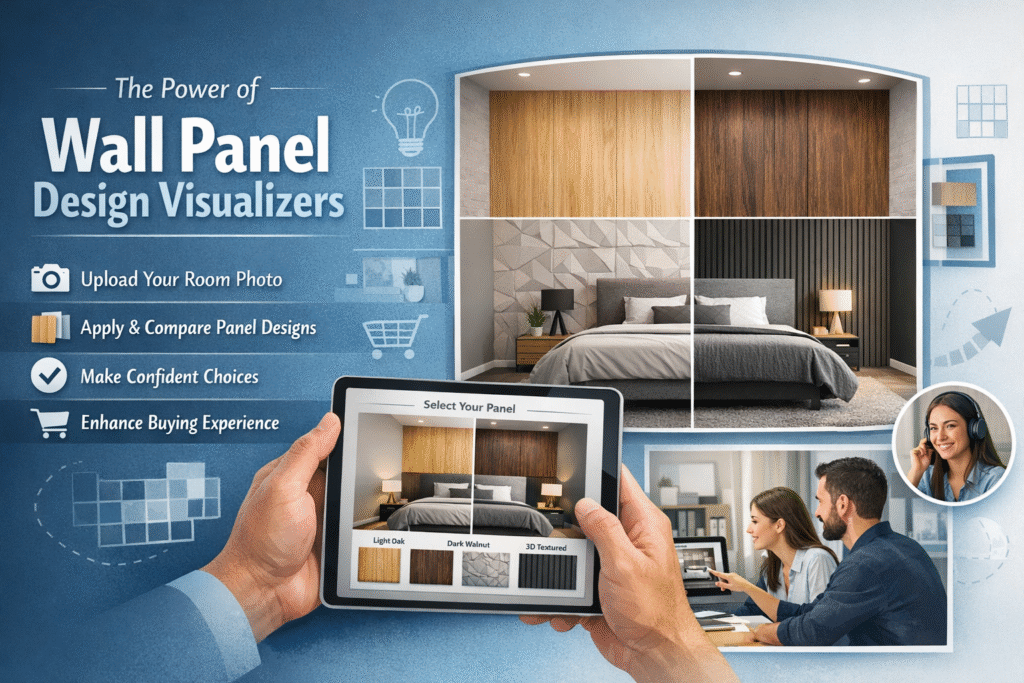
What Is a Wall Panel Design Visualizer?
A wall panel design visualizer is an interactive digital tool that allows users to preview wall panel designs in realistic room environments. Instead of relying on small product samples or imagination, users can upload an image of their room or choose a preset interior and instantly apply different panel designs.
This technology uses advanced rendering and artificial intelligence to simulate how panels will appear on walls, helping users understand colors, textures, and patterns in context.
With a wall panel design visualizer, users can:
• Upload a photo of their own room
• Apply different wall panel designs instantly
• Compare multiple styles and textures
• Visualize patterns, layouts, and finishes
• Make confident purchasing decisions
For homeowners, this removes the uncertainty of design choices. For brands and retailers, it creates a more engaging and interactive shopping experience.
Why Wall Panel Visualization Is Becoming Essential
Wall panels have become one of the most popular interior design elements. They add texture, depth, and personality to a space, whether it’s a residential living room, a hotel lobby, or a commercial office.
However, selecting the right panel design can be challenging. A panel that looks perfect in a showroom or catalog may appear completely different in a real space.
This is where a wall panel design visualizer becomes incredibly valuable.
Instead of imagining how the panel might look, users can see the final result instantly. This dramatically reduces design uncertainty and makes the decision-making process much easier.
For interior designers, this also speeds up client approvals because clients can visualize the final outcome before installation even begins.
How a Wall Panel Design Visualizer Works
Most modern visualization tools are designed to be simple and user-friendly. Even someone with no technical knowledge can use them easily.
Step 1: Upload or Select a Room
Users can either upload a photo of their own room or choose from preset interior spaces such as living rooms, bedrooms, offices, or commercial environments.
Step 2: Select a Panel Design
Once the room is loaded, users can browse through a library of wall panel products. These may include wooden panels, decorative 3D panels, acoustic panels, or textured designs.
Step 3: Apply the Panel to the Wall
With one click, the system applies the panel design to the selected wall surface. The visualizer adjusts the texture, scale, and lighting to match the environment realistically.
Step 4: Compare and Customize
Users can experiment with different panel styles, colors, and arrangements until they find the perfect match.
This process takes only a few seconds, making the wall panel design visualizer an incredibly efficient tool.
Benefits for Interior Designers
Interior designers constantly work with clients who struggle to imagine the final outcome of a design concept. Showing sketches or mood boards can help, but it often doesn’t provide a clear picture.
A wall panel design visualizer solves this problem by turning concepts into realistic visuals.
Some major advantages for designers include:
Faster design presentations
Better client understanding
Quick design revisions
More confident project approvals
For example, a designer working on a luxury living room can instantly test multiple panel textures and layouts with the client during a meeting. Instead of revisiting the concept days later, decisions can be made immediately.
Benefits for Wall Panel Brands and Manufacturers
For manufacturers and suppliers, a wall panel design visualizer is not just a design tool. It is also a powerful sales engine.
Customers browsing products online often hesitate to buy because they cannot visualize how the product will look in their own space. This uncertainty leads to abandoned purchases and delayed decisions.
Visualization technology removes that barrier.
Brands that integrate a wall panel design visualizer on their website allow customers to interact with their products before buying. This increases engagement and builds buyer confidence.
In many cases, brands see benefits such as:
Higher customer engagement
Better product understanding
Reduced return rates
Increased online conversions
Platforms like Nirwana.ai have introduced visualization solutions that enable brands to showcase wall panels and other interior materials in real spaces instantly, helping customers experience products before purchase.
Real-World Example of Visualization in Action
Imagine a homeowner renovating their bedroom. They are considering installing wooden wall panels behind the bed as a feature wall.
Without visualization, they might rely on small samples from a store or photos from catalogs. But those references cannot accurately represent how the panels will look in their own room.
Using a wall panel design visualizer, the homeowner uploads a photo of the bedroom wall and applies different panel options instantly.
Within minutes they can compare:
Light oak panels
Dark walnut panels
Textured 3D panels
Modern geometric panels
This process helps them confidently select the design that fits their room’s lighting, furniture, and style.
Why Visualization Is the Future of Interior Product Sales
The interior design industry is moving rapidly toward digital experiences. Consumers today expect to explore products online with the same confidence they would have in a showroom.
Visualization tools are becoming essential because they bridge the gap between imagination and reality.
A wall panel design visualizer provides a realistic preview that helps customers understand how a product will actually look in their space. This dramatically improves the buying journey.
Instead of browsing static product images, customers can interact with products in a dynamic and immersive way.
Brands that adopt this technology early are positioning themselves ahead of competitors who still rely on traditional catalogs.
Choosing the Right Visualization Solution
Not all visualization tools are created equal. When selecting a wall panel design visualizer, brands and designers should look for features such as:
Realistic rendering and lighting
Easy room uploads
Accurate scaling of panels
Mobile and desktop compatibility
Integration with product catalogs
A good visualizer should be simple enough for everyday users while powerful enough for professionals.
Solutions like Nirwana.ai are helping companies bring advanced visualization experiences directly to their websites and showrooms, making design decisions easier for everyone involved.
Conclusion
Interior design decisions should never feel like a gamble. Whether someone is redesigning a home, planning a commercial space, or choosing materials for a renovation project, seeing the final look beforehand makes the process far more confident and enjoyable.
A wall panel design visualizer empowers homeowners, designers, and brands to experiment with designs instantly and visualize products in realistic environments. This technology removes guesswork, speeds up decisions, and creates a more engaging design experience.
As digital visualization continues to shape the future of interior design, tools like Nirwana.ai are helping bring products closer to real-life environments, making it easier than ever to explore design possibilities.
If you’re looking to enhance how wall panel designs are presented and experienced, adopting visualization technology could be the next step toward smarter and more confident interior design decisions.
