

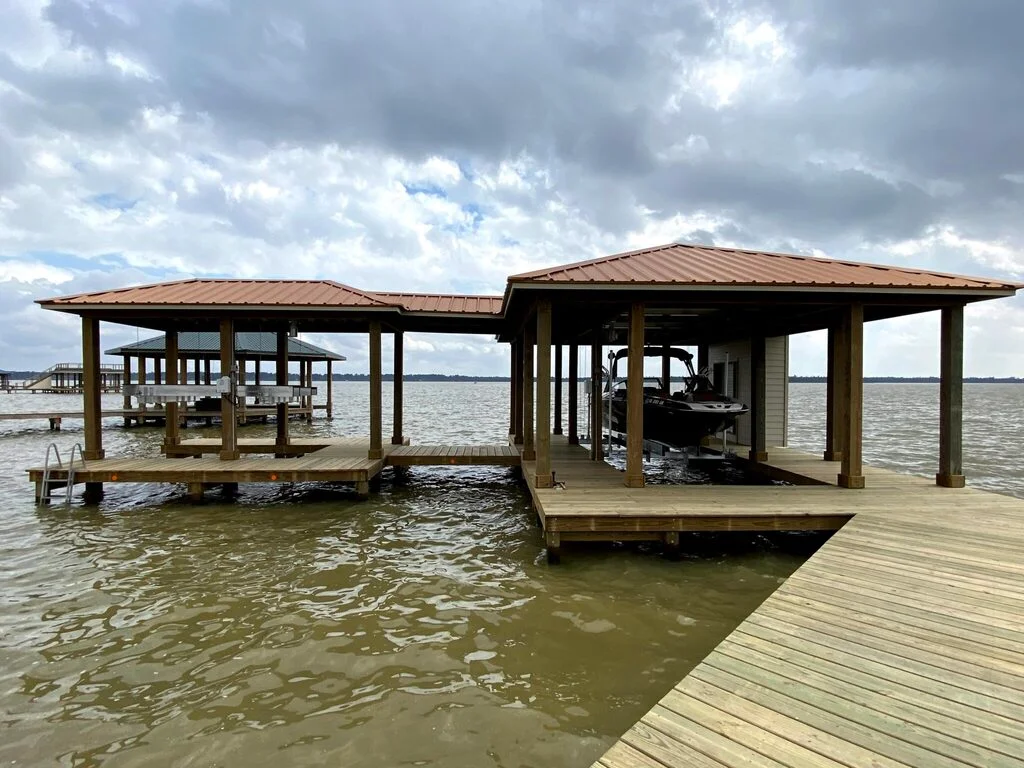
Boat House Builders Do More Than Just Build Sheds Over Water
Most people think boat house builders just show up, hammer some posts into the water, throw a roof on top, and call it a day. Not even close. A real build is more like a small engineering project that just happens to sit over a lake or shoreline. There’s layout work, load planning, soil and bed testing, permit headaches, and a bunch of structural decisions that can’t be guessed at. Good crews measure twice and then measure again because once something goes into the water wrong, fixing it costs real money. A proper boathouse has to handle waves, wind, shifting soil, and constant moisture. That’s not backyard carpentry. That’s marine construction whether folks realize it or not.
The Site Conditions Decide Almost Everything
Before anything gets built, experienced boat house builders study the site. Water depth. Bottom type. Shore slope. Seasonal water level changes. Boat traffic. Wake exposure. You can’t just copy your neighbor’s structure and expect it to work the same. Clay bottoms behave different than sand. Rocky beds need different equipment. Some shorelines look stable but are soft a few feet down — that’s where structures start leaning two years later and owners wonder why. Smart builders plan for worst-case water movement, not best case calm days. It’s slower upfront, but cheaper long term. Quick builds usually turn into repair jobs. I’ve seen that movie too many times.
Design Isn’t Just Looks — It’s Load And Stress
A lot of clients start with looks. Roof style. Trim color. Lift placement. That’s fine, but structure comes first. The design has to account for live loads like people walking, gear storage, and wave impact, plus dead loads like roofing and framing weight. Boat house builders who know their stuff think about forces you don’t see. Uplift pressure from storms. Lateral movement from wake. Torque from uneven loading. The pretty stuff sits on top of that math. Skip the math and the pretty stuff won’t stay pretty for long. Not trying to sound dramatic — just honest. Water structures fail quietly at first, then suddenly.
Why Pile Driving Matters More Than People Expect
Let’s talk about pile driving because this is where the real backbone of the project lives. If piles aren’t set right, nothing above them matters much. Pile driving is the process of forcing long structural posts deep into the ground below the water so the structure doesn’t shift or settle. Depth matters. Alignment matters. Even spacing matters. Good boat house builders don’t guess pile depth — they drive until resistance hits proper load capacity. Some sites need deeper drives than others. Some require steel instead of timber. It depends on soil and stress load. People sometimes try to save money here, and yeah, that’s usually the mistake that shows up first.
Materials Choices Are Not Just About Budget
Everyone asks about material cost. Fair question. But material choice is about lifespan and maintenance more than upfront price. Pressure treated lumber, composite decking, galvanized hardware, marine-grade fasteners — these aren’t upsells, they’re survival gear for structures that live in wet environments. Cheap hardware corrodes. Regular bolts fail. Standard nails loosen. Boat house builders who cut corners on materials leave a ticking clock behind. Better materials don’t make the job fancy — they make it last. There’s a difference. You either pay now or pay later with repairs and replacements. Later is always more expensive, by the way.
Permits, Codes, And The Not-So-Fun Paperwork
Nobody gets excited about permits, but they’re part of the job whether you like it or not. Real boat house builders deal with local regulations, shoreline setbacks, environmental rules, and structural codes. Every region is different. Some lakes are strict. Some counties are loose until they aren’t. Skipping permits might seem faster, but it can shut down a project mid-build or cause removal orders later. That’s not scare talk — that happens. Builders who know local rules save owners from that mess. It’s not glamorous work. It’s phone calls and forms and waiting. Still counts as part of the build.
Weather Timing Changes How Projects Get Built
Water projects don’t run like land builds. Weather windows matter. Wind matters. Water level matters. Even boat traffic matters. Good boat house builders schedule around conditions, not just calendars. Some installs need calm water for accurate pile driving. Some roofing installs can’t happen during windy weeks. Crews adapt constantly. That’s normal. A rushed timeline and a water structure don’t mix well. When a builder says, “We need to wait a bit,” it’s usually experience talking, not delay tactics. Patience beats rework every time.
Experience Shows Up In The Small Decisions
You can tell experienced boat house builders by the small choices they make without making a speech about it. Fastener placement. Bracing angles. Deck spacing. Lift clearance. Drain paths. None of it looks flashy, but it keeps the structure solid year after year. Newer crews focus on speed. Veteran crews focus on stability. Different mindset. Small decisions stack up into big durability. That’s why two structures that look similar on day one can look very different five years later. One still tight. One leaning and creaking. Craft shows over time, not opening day.
Conclusion: Strong Foundations Make Boat Houses Worth The Investment
A well-built boathouse isn’t just a cover for a boat. It’s a structural system sitting in one of the harshest environments you can build in — moving water, wet air, shifting ground. That’s why skilled boat house builders matter more than most people realize. The visible parts are only half the story. The hidden structure and proper pile driving carry the real weight, literally. When the foundation is done right and the build respects the environment, the structure holds up, needs fewer repairs, and actually earns its cost back over time. Cut corners and it becomes a maintenance project. Build it right and it becomes an asset.
FAQs
How long does a boathouse typically take to build?
Most standard projects take a few weeks, but timing shifts based on permits, weather, and site difficulty. Water depth and soil type can slow pile installation more than expected.
Do boat house builders handle repairs too?
Many do. Especially structural repairs, deck replacement, roof updates, and lift retrofits. It depends on the contractor, but repair work is common in this field.
What type of piles last the longest?
Treated timber, steel, and concrete piles can all last if installed correctly. Lifespan depends more on proper pile driving depth and soil conditions than material alone sometimes.
Can an existing dock be upgraded into a boathouse?
Sometimes yes, sometimes no. Builders have to inspect foundation strength, spacing, and load capacity first. Not every dock frame can safely support a roof structure.
Top-Rated Beirut Escorts Offering Sophisticated Experiences
Saving Time and Money with a Healthcare Virtual Assistant Today
What to Look for When Choosing a Trade Show Booth Manufacturer in the U.S.?
How Recreational Cannabis Stores Work: Rules and Regulations
Remote Bookkeeping Services Australia: The Invisible Engine Behind Modern Businesses
About the Author