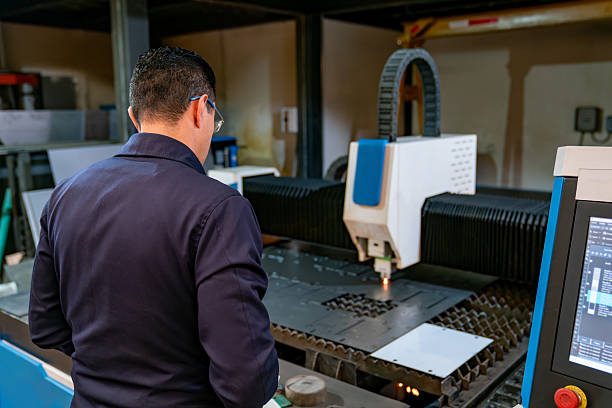
Precision is a defining factor in modern metal manufacturing. Industries such as aerospace, automotive, electronics, medical devices, and industrial machinery demand components that meet exact specifications with minimal tolerance variation. Among the many metal fabrication methods available today, laser cutting stands out as one of the most precise, versatile, and efficient technologies. However, it is not always the best solution for every project. Understanding when to choose laser cutting for precision metal parts is essential for achieving optimal results in terms of quality, cost, and production efficiency.
This article explores the scenarios where laser cutting is the ideal choice, the advantages it offers over traditional methods, and how it integrates with modern digital design and engineering workflows.
Understanding Laser Cutting Technology
Laser cutting is a thermal cutting process that uses a high-powered, focused laser beam to melt, burn, or vaporize material along a programmed path. The laser is guided by CNC (Computer Numerical Control) systems, ensuring consistent accuracy and repeatability. Depending on the material and application, different types of lasers—such as CO₂ lasers or fiber lasers—are used to achieve clean, precise cuts.
The process is non-contact, meaning the cutting tool never physically touches the material. This eliminates tool wear and minimizes mechanical stress on the part, making laser cutting especially suitable for precision metal components.
When Precision Is a Top Priority
One of the clearest situations where laser cutting should be chosen is when high precision is required. Laser cutting can achieve extremely tight tolerances, often within fractions of a millimeter. This level of accuracy is difficult to match with traditional cutting methods such as sawing, punching, or plasma cutting.
For parts that must fit perfectly within assemblies or interact with other components, laser cutting ensures consistent geometry across production runs. Precision becomes even more critical when designs are created using detailed digital workflows such as 3D CAD Modeling, where exact dimensions and geometries must be faithfully translated from the digital model to the physical part.
Complex Geometries and Intricate Designs
Laser cutting excels when working with complex shapes, intricate patterns, and fine details. Traditional machining methods may struggle with sharp internal corners, small holes, or delicate features without secondary operations. Laser cutting, by contrast, can follow highly detailed paths with minimal loss of accuracy.
This makes laser cutting ideal for components such as brackets, enclosures, panels, decorative metal parts, and functional elements with detailed cutouts. When a design includes multiple features in close proximity, laser cutting ensures clean separation without distortion or deformation.
Thin to Medium Thickness Metal Sheets
Laser cutting is particularly effective for thin to medium thickness metal sheets. Materials such as stainless steel, aluminum, mild steel, brass, and copper can be cut cleanly and efficiently within specific thickness ranges. While laser cutting can handle thicker materials, its greatest advantages in precision and edge quality are realized in sheet metal applications.
For manufacturers producing precision sheet metal parts, laser cutting provides excellent edge finish, minimal kerf width, and reduced need for post-processing. This leads to higher overall accuracy and better aesthetic and functional results.
Minimal Heat-Affected Zone Requirements
Although laser cutting is a thermal process, it produces a relatively small heat-affected zone compared to other thermal cutting methods like plasma or oxy-fuel cutting. This is especially important when working with materials that are sensitive to heat or when dimensional stability is critical.
A smaller heat-affected zone means less warping, reduced internal stresses, and better preservation of material properties. For precision metal parts where flatness, strength, and surface integrity matter, laser cutting offers a significant advantage.
Fast Turnaround and Prototyping Needs
Laser cutting is an excellent choice when fast turnaround times are required. Once the digital design is finalized, parts can be cut quickly without the need for custom tooling. This makes laser cutting particularly suitable for prototyping, low-volume production, and iterative design processes.
When combined with digital workflows such as 3D CAD Modeling, design changes can be implemented rapidly, and updated files can be sent directly to the laser cutting system. This flexibility allows engineers and manufacturers to refine designs efficiently while maintaining high precision.
Consistency in Medium to High Volume Production
For medium to high volume production runs, consistency is just as important as precision. Laser cutting systems deliver repeatable results across thousands of parts, ensuring uniform quality throughout the production batch.
Because the process is fully automated and CNC-controlled, human error is minimized. This consistency is critical in industries where interchangeable parts are required and quality standards are strict. Laser cutting ensures that each component matches the original design specifications with minimal variation.
Clean Edges and Reduced Secondary Operations
Another key reason to choose laser cutting is the quality of the cut edge. Laser-cut parts typically have smooth, burr-free edges that often require little to no secondary finishing. This not only improves dimensional accuracy but also reduces production time and labor costs.
In applications where parts will be welded, painted, or assembled directly after cutting, clean edges are essential. Laser cutting helps maintain precision throughout downstream processes by delivering parts that are ready for immediate use.
Integration with Reverse Engineering Workflows
Laser cutting is also highly effective when manufacturing parts derived from existing components. In cases where original design data is unavailable, engineers may use 3D Laser Scanning Reverse Engineering to capture the geometry of a physical part. The scanned data is then converted into a digital model that can be refined and prepared for production.
Once the digital model is finalized, laser cutting provides a reliable way to reproduce the part with high accuracy. This is particularly valuable in maintenance, repair, and replacement applications, where precision is required to ensure compatibility with existing systems.
Material Efficiency and Reduced Waste
Laser cutting is known for its efficient material usage. The narrow kerf width and optimized nesting capabilities allow manufacturers to maximize material utilization and minimize scrap. This is especially beneficial when working with expensive metals or when sustainability goals are a priority.
By reducing waste and improving yield, laser cutting contributes to both cost savings and environmentally responsible manufacturing. Precision cutting also means fewer rejected parts, further improving overall efficiency.
When Tight Tolerances Meet Modern Quality Standards
Industries with strict regulatory and quality requirements often rely on laser cutting to meet their standards. Medical devices, aerospace components, and electronic enclosures frequently demand tight tolerances, traceability, and consistent quality.
Laser cutting supports these requirements by providing predictable, repeatable results and seamless integration with inspection and quality control systems. CAD-based inspection processes can reference the same digital data used for cutting, ensuring alignment between design intent and finished parts.
Limitations to Consider
While laser cutting offers many advantages, it is important to recognize its limitations. For extremely thick materials, alternative methods such as waterjet cutting or traditional machining may be more suitable. Additionally, highly reflective materials can pose challenges for certain laser systems, although modern fiber lasers have significantly reduced these issues.
Understanding these limitations helps manufacturers choose laser cutting when it truly adds value, rather than applying it indiscriminately.
Choosing Laser Cutting as a Strategic Decision
Selecting laser cutting for precision metal parts should be a strategic decision based on design complexity, material type, required tolerances, production volume, and turnaround time. When precision, repeatability, and flexibility are key priorities, laser cutting often emerges as the optimal solution.
By integrating laser cutting into digital design and engineering workflows, manufacturers can achieve a seamless transition from concept to production. Whether working from original digital designs or parts recreated through 3D Laser Scanning Reverse Engineering, laser cutting ensures that precision is maintained at every stage.
Conclusion
Laser cutting has become a cornerstone of precision metal manufacturing, offering unmatched accuracy, flexibility, and efficiency for a wide range of applications. It is the ideal choice when parts require tight tolerances, complex geometries, clean edges, and consistent quality across production runs.
When supported by advanced digital tools such as 3D CAD Modeling and integrated into modern engineering workflows, laser cutting enables manufacturers to produce high-quality metal components with confidence. Understanding when to choose laser cutting—and when alternative methods may be more appropriate—empowers businesses to make informed decisions that enhance product quality, reduce costs, and improve overall manufacturing performance.
