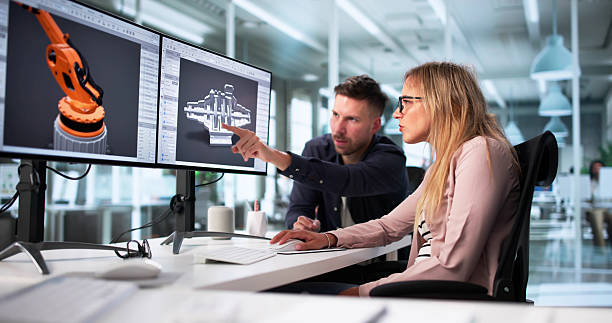
In the modern manufacturing landscape, speed and precision are critical factors in staying competitive. Traditional product design and prototyping processes, often time-consuming and costly, have been replaced by innovative solutions like 3D CAD (Computer-Aided Design) product design tools and 3D printing for product design. These technologies have transformed how industries create and test prototypes, offering faster iterations, more cost-effective solutions, and improved product quality. In this article, we will explore why 3D CAD product design solutions are essential for prototyping and testing, highlighting how these tools streamline the process, reduce errors, and enable faster time-to-market.
What is 3D CAD?
3D CAD design and manufacturing involve using digital tools to create three-dimensional models of products. Unlike traditional methods of design, where physical drawings and models are used, 3D CAD tools allow designers to create, modify, and test designs in a virtual environment. This technology provides an accurate representation of the product, down to the smallest detail, enabling manufacturers to visualize and analyze the product before it even exists in physical form.
In combination with 3D printing for product design, this allows for the creation of prototypes that are not only faster to produce but also more precise and customizable than traditional models.
Faster Prototyping with Digital Models
Prototyping is a crucial stage in the product development process, as it allows manufacturers to test a design before committing to full-scale production. Traditionally, prototyping involved creating physical models, which was often a time-consuming and expensive process. In contrast, 3D CAD product design solutions enable rapid prototyping by creating accurate digital representations of a product.
Once a design is completed in the 3D CAD environment, it can be immediately tested virtually. If issues are identified, the design can be easily modified and re-tested without the need for time-consuming physical alterations. This rapid iteration process significantly reduces the overall time required to develop a prototype, allowing manufacturers to move on to the production stage much faster.
Furthermore, 3D printing for product design can turn a 3D CAD model into a physical prototype in a fraction of the time and cost of traditional methods. This allows for faster testing and validation, which is essential for getting products to market quickly.
Cost-Effective Prototyping
Traditional prototyping methods, such as using clay models, CNC machining, or injection molding, often require significant investments in materials, labor, and time. These processes can also incur high costs for each iteration of a prototype. In contrast, 3D CAD design and manufacturing, combined with 3D printing, offer a more cost-effective approach.
With 3D printing, manufacturers only need the digital model and the material to produce a prototype. Materials are used efficiently, minimizing waste and cost. Additionally, since 3D printing allows for rapid prototyping, there is less need for expensive rework or redesigns. If a design flaw is discovered, the changes can be made in the digital design, avoiding costly physical revisions.
In the long run, using 3D CAD solutions for product design and prototyping can help companies reduce the overall expenses associated with product development and testing. The ability to produce multiple prototypes at a low cost increases the efficiency of the design process and ensures that products meet the required specifications before full-scale production begins.
Improved Design Accuracy and Precision
One of the most significant benefits of 3D CAD product design solutions is the ability to create highly accurate and precise designs. Traditional design methods, such as hand-drawn sketches or physical models, are often subject to human error, which can lead to issues during the manufacturing or testing phases.
With 3D CAD, designers can create digital models with exact measurements and detailed specifications. These models are precise down to the smallest detail, reducing the chances of errors during production. Since the design is virtual, it can be tested in a variety of simulated conditions to ensure that it meets all the necessary requirements before being physically produced.
For prototyping and testing, this level of accuracy is essential. The virtual representation of the product allows manufacturers to identify potential design flaws early in the process, saving time and resources in the long run. Additionally, when a prototype is created from a 3D CAD model, it is far more likely to match the intended design perfectly, minimizing the need for adjustments after testing.
Enhanced Collaboration and Communication
The product development process often involves collaboration between multiple teams, including designers, engineers, manufacturers, and stakeholders. In the past, communicating design ideas and revisions could be a challenge, particularly when teams were working remotely or across different locations. However, 3D CAD product design solutions have simplified collaboration by providing a centralized, digital platform for design creation, modification, and testing.
Since 3D CAD models are digital, they can be shared easily among teams, regardless of their location. Teams can view, comment on, and revise the designs in real-time, ensuring that everyone is on the same page. This reduces the chances of miscommunication and accelerates the decision-making process.
Moreover, 3D CAD software often includes features that enable real-time simulation and testing. For example, engineers can use the software to test a product’s functionality and identify potential issues related to materials, stress, or performance before creating physical prototypes. This shared understanding of the design helps all teams make more informed decisions, ensuring the final product is both functional and high-quality.
Streamlined Testing and Simulation
Traditional testing methods can be costly, requiring physical prototypes, test equipment, and materials. With 3D CAD design and manufacturing, however, testing can be done digitally. Before creating a physical prototype, designers can use CAD tools to simulate the behavior of the product in various conditions.
For instance, if the product needs to withstand stress or pressure, the 3D CAD software can simulate how it will react under those conditions. Similarly, designers can test factors such as heat resistance, durability, and material performance. By conducting these tests virtually, manufacturers can identify and address issues early in the design process, saving time and resources.
Once a virtual design has been optimized through testing and simulation, it can be turned into a physical prototype using 3D printing for product design. The prototype can then undergo further testing, confirming the results of the digital simulations and ensuring the product will perform as expected in the real world.
Faster Iteration and Design Flexibility
In traditional product development, making changes to a design after creating a physical prototype could be a slow and costly process. However, 3D CAD product design solutions offer unparalleled flexibility in terms of design iteration. If an issue arises or a new idea is proposed, changes can be made quickly and efficiently in the digital model.
This flexibility is crucial for the prototyping and testing stages, where multiple iterations are often necessary to refine the design. In the past, each iteration would require the production of a new physical prototype, adding time and cost to the process. With 3D CAD and 3D printing, manufacturers can rapidly produce new versions of a prototype with minimal effort, allowing for faster design evolution.
Moreover, 3D CAD design tools can be used to experiment with different materials, structures, and features. Designers can explore multiple design options without the need for multiple physical prototypes, reducing the time it takes to find the best solution.
Customization and Personalization
Today’s consumers increasingly demand personalized and customized products. 3D CAD product design solutions offer manufacturers the ability to easily create customized prototypes to meet specific customer needs. Whether it’s modifying an existing design or creating something entirely unique, 3D CAD allows for quick modifications without compromising the quality or integrity of the product.
For example, a company may want to offer personalized features for a product, such as custom shapes, colors, or sizes. With 3D CAD design tools, these adjustments can be made rapidly, enabling manufacturers to test the customized design and ensure it meets the desired specifications before moving into production. This level of personalization would be far more difficult and costly to achieve using traditional design methods.
Enhanced Product Quality
Finally, 3D CAD product design solutions lead to enhanced product quality. The ability to create highly accurate models, test them virtually, and quickly produce prototypes ensures that the final product is of superior quality. Whether it’s reducing errors during the design process, improving communication among teams, or enabling faster and more efficient testing, 3D CAD solutions ensure that each product meets the required standards.
The ability to test designs in a variety of conditions before physical production begins significantly reduces the chances of product failure. Moreover, the speed and cost-effectiveness of rapid prototyping enable manufacturers to refine their products continuously, leading to higher-quality products that meet or exceed customer expectations.
Conclusion
In today’s competitive manufacturing landscape, adopting 3D CAD product design solutions for prototyping and testing is not just a luxury but a necessity. From faster prototyping and cost savings to improved design accuracy and enhanced collaboration, the benefits of 3D CAD and 3D printing for product design are clear. These technologies allow manufacturers to iterate designs quickly, test them in virtual environments, and produce prototypes with minimal time and cost.
As industries continue to evolve, those who embrace 3D CAD design and manufacturing will be better equipped to innovate, reduce production costs, and deliver high-quality products faster. By utilizing these advanced tools, manufacturers can enhance their prototyping and testing processes, ensuring they stay ahead in an ever-changing market.
