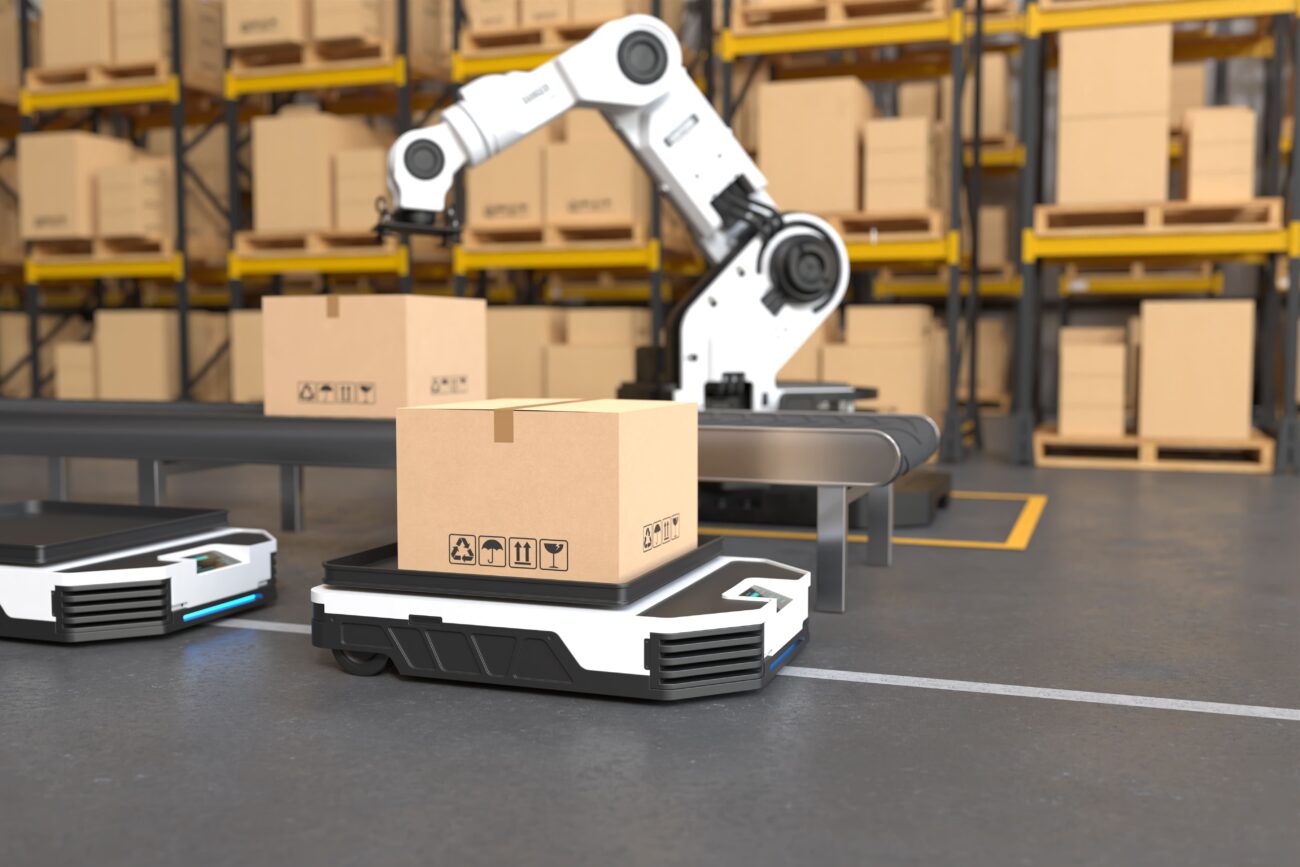
Boxes pile up near the end of the production line. Workers stack them one by one. Someone wipes sweat off their forehead. Someone else checks the clock. The shift still has hours left.
Sound familiar?
Manual palletizing has always been part of factory life. But here’s the honest question. Should it still be?
More Malaysian manufacturers are turning to the robotic palletizer for one simple reason. It handles repetitive work better than humans ever could. And when paired with automation conveyor systems, the whole production line suddenly feels smarter.
Let’s walk through why businesses are making the switch.
8 Reasons Why You Should Invest in a Robotic Palletizer for Your Malaysian Business
1. You Reduce Physical Strain on Workers
Stacking boxes all day is exhausting work. Even with strong teams, fatigue shows up quickly.
A robotic palletizer handles the heavy lifting instead. Your workers focus on tasks that actually require judgment and skill.
This change usually leads to:
- Less workplace fatigue
- Fewer lifting injuries
- Higher employee morale
People still matter in automation. They just stop doing the back-breaking parts.
2. Your Production Speed Becomes Consistent
Humans slow down. Robots don’t.
A robotic palletizer stacks products at the same speed all day. Morning shift, night shift, busy season—it doesn’t matter.
Consistency keeps production lines predictable. When integrated with automation conveyor systems, products move smoothly from packing to palletizing without delays.
And consistency is gold in manufacturing.
3. Accuracy Improves Immediately
Manual stacking often looks fine… until the pallet moves.
Boxes lean. Rows shift. Transport becomes risky.
A robotic palletizer stacks with precision. Every layer follows the programmed pattern.
The result?
- Neater pallets
- Safer transportation
- Less product damage
Your warehouse team will notice the difference instantly.
4. You Save Space on the Production Floor
Factories in Malaysia don’t always have unlimited floor space. Equipment placement matters.
A robotic palletizer system is usually compact and efficient. It works within a defined footprint and integrates easily with automation conveyor systems.
That means you can:
- Organize production flow better
- Reduce clutter near the packing line
- Improve worker movement across the floor
Good automation doesn’t crowd your space. It optimizes it.
5. Labor Shortages Become Less Stressful
Many industries face the same challenge right now. Finding reliable workers for repetitive tasks is harder than before.
Automation helps close that gap.
A robotic palletizer handles pallet stacking continuously. Your team focuses on supervision, quality checks, and system management.
This shift keeps production running even when staffing changes.
6. Workplace Safety Improves
Let’s be honest. Heavy boxes and long hours are not a safe combination.
A robotic palletizer removes many risks linked to manual pallet stacking.
Benefits often include:
- Reduced lifting injuries
- Fewer workplace accidents
- Safer warehouse operations
Many Malaysian factories introduce automation specifically to improve safety standards.
Reliable automation providers like Buildtech System often design palletizing solutions that prioritize both productivity and worker safety.
7. Long-Term Costs Become More Predictable
Automation requires investment. That part is obvious.
But over time, a robotic palletizer often lowers operating costs.
Why?
Because automation reduces:
- Product damage
- Labor overtime
- Workplace injuries
- Production delays
When combined with automation conveyor systems, the efficiency gains multiply.
Many businesses see the real savings appear within a few years.
8. Your Business Becomes Future-Ready
Manufacturing in Malaysia is evolving quickly. Customers expect faster delivery and consistent quality.
Automation helps businesses stay competitive.
A robotic palletizer system allows you to:
- Scale production easily
- Maintain consistent output
- Adapt to higher demand
Companies working with automation specialists like Buildtech System often discover that palletizing is just the first step toward a more efficient factory.
Once automation begins, the rest of the production line often follows.
A Simple Question for Business Owners
Think about your current palletizing process.
- Is it fast?
- Is it consistent?
- Is it safe for workers?
If the answer to any of those questions feels uncertain, automation might be worth considering.
What to Consider Before Installing a Robotic Palletizer?
Before you jump into automation, pause for a moment. Not every production line works the same way. A robotic palletizer performs best when the setup matches your actual workflow.
Start by looking at your current operations. Ask a few simple questions.
- How many boxes move through your line every hour?
- Are the products all the same size, or do they vary?
- How much floor space do you have near the packing area?
- Do your current automation conveyor systems allow smooth product flow?
These questions help determine the right palletizing solution.
You should also think about future growth. Many Malaysian factories install systems that handle today’s demand but struggle when production increases later.
A well-planned robotic palletizer setup should support:
- Higher production volume
- Different box sizes
- Easy integration with conveyors
- Simple operator controls
This is why many businesses work with experienced automation providers like Buildtech System. Proper planning early prevents expensive adjustments later.
Final Thoughts
Investing in a robotic palletizer is not just about technology. It’s about making daily operations smoother, safer, and more predictable.
When combined with well-designed automation conveyor systems, palletizing becomes one of the most efficient parts of the production process.
For many Malaysian businesses, the question is no longer if they should automate. It’s when.
And the sooner the transition happens, the sooner the benefits begin.
Key Points
- Robotic palletizers reduce heavy manual labor
- Production speed becomes more consistent
- Pallet stacking accuracy improves
- Automation saves valuable floor space
- Workplace safety increases
FAQs
What does a robotic palletizer do?
It automatically stacks products onto pallets in a consistent pattern.
Can robotic palletizers work with existing production lines?
Yes. They integrate easily with automation conveyor systems.
Are robotic palletizers suitable for Malaysian factories?
Yes. Many industries in Malaysia use them to improve efficiency and safety.
Emergency Tyre Repair Birmingham – Fast Roadside Help by Rapid Replace Mobile Tyre
Can Fat Melting Injections Improve Body Contours?
Clinic Management Software and MIS Dashboard for Better Healthcare
How Soon Can Botox Show Results for Facial Palsy
Why Hiring an Attorney for Wills and Estates Is One of the Best Decisions for Your Family
