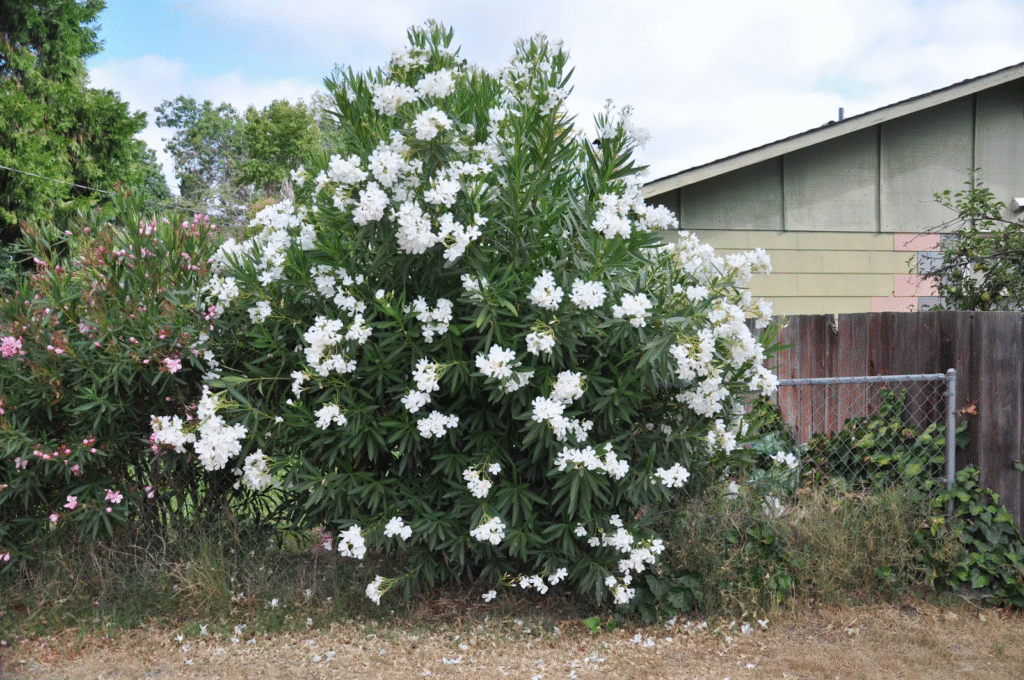
Few ornamental trees deliver the combination of visual impact, drought tolerance, and year-round performance that the White Oleander Tree brings to a residential or commercial landscape. Native to the Mediterranean basin and widely naturalised across subtropical regions worldwide, this elegant evergreen has been a staple of warm-climate gardens for centuries. Its clusters of pure white, funnel-shaped blooms appear in abundance from late spring through autumn, creating a continuous display of colour and fragrance that few other flowering trees can sustain over such an extended season without demanding constant attention from the gardener.
Growth Characteristics and Visual Appeal
The White Oleander Tree typically reaches a mature height of 10 to 20 feet depending on the cultivar and growing conditions, with a naturally rounded canopy that provides both visual structure and light shade to the area beneath it. The narrow, leathery, dark green leaves remain on the tree throughout the year, ensuring that your landscape never looks bare or dormant even during the cooler winter months when most deciduous ornamentals have dropped their foliage entirely.
What makes the White Oleander Tree particularly attractive to landscape designers and homeowners alike is its remarkable versatility in planting applications:
- As a standalone specimen tree anchoring a front garden or courtyard entrance
- As a privacy screen or hedge when planted in rows along property boundaries and fence lines
- As a container tree for patios, pool decks, and rooftop terraces where in-ground planting is not possible
- As a street tree or median planting in commercial developments and municipal beautification projects
- As a windbreak in coastal properties where salt tolerance is a critical requirement
Hardiness and Low Maintenance Requirements
One of the strongest practical advantages of the White Oleander Tree is its exceptional hardiness in challenging growing conditions that would stress or kill less resilient ornamental species. Once established, oleanders are remarkably drought tolerant, thriving in USDA hardiness zones 8 through 11 with minimal supplemental irrigation beyond natural rainfall patterns.
The White Oleander Tree also tolerates poor, sandy, and alkaline soils that many other flowering trees refuse to grow in productively. It handles salt spray from coastal winds, reflected heat from pavement and building surfaces, and the compacted root zones commonly found in urban planting environments. This resilience makes it an ideal choice for challenging sites where other ornamentals would require constant coddling, amended soil, and expensive irrigation systems to survive.
Pruning requirements are modest and straightforward. An annual shaping in late winter or early spring, before the new growth flush begins, keeps the canopy tidy and encourages vigorous flowering on the current season’s new wood. Remove any dead, crossing, or damaged branches during this pruning session, and the tree will reward you with a dense, well-shaped canopy covered in white blooms throughout the warmer months.
Important Safety Considerations
Transparency about the White Oleander Tree requires mentioning that all parts of the plant, including leaves, stems, flowers, bark, and sap, contain toxic cardiac glycosides that are harmful if ingested by humans or animals. This is not a reason to avoid planting oleanders, as thousands of public parks, highway medians, and residential landscapes across the southern United States, Australia, and the Mediterranean feature them safely. However, it does mean that:
- The tree should be planted away from areas where young children or pets play unsupervised
- Pruning debris should be collected and disposed of properly rather than composted or burned
- Gardeners should wear gloves when handling cuttings and wash hands thoroughly after pruning sessions
- Fallen leaves and flower petals should be cleared from areas accessible to livestock or grazing animals
Planting and Establishment
Planting a White Oleander Tree is straightforward. Choose a location with full sun exposure for maximum flowering performance, ensure adequate drainage to prevent root rot, and water deeply during the first growing season to establish a strong root system. Once established, reduce watering frequency gradually to encourage deep root development that sustains the tree through extended dry periods.
The Bottom Line
The White Oleander Tree delivers unmatched ornamental value for warm-climate landscapes where drought tolerance, year-round foliage, and extended flowering season are priorities. For gardeners and landscapers looking to source quality specimens alongside a broader selection of ornamentals, shrubs, and shade trees, browsing a curated collection of Plants for Sale from a trusted nursery ensures you find healthy, well-rooted stock ready to thrive in your specific growing conditions from the moment it goes into the ground.
