Wahoo are not casual fish. They don’t wander up slowly and inspect your spread like curious tourists. They move fast. They commit fast. And when they miss, they’re usually gone just as quickly.
That’s why trolling for Wahoo feels different from trolling for almost anything else offshore. You’re not just dragging lures. You’re setting a trap built on speed, reaction, and timing.
And if your setup is slightly off, they’ll tell you by ignoring it completely.
Speed Is the Starting Point
Most offshore trolling happens in a comfortable range. Wahoo fishing does not.
They thrive in high-speed scenarios. Eight knots. Ten knots. Sometimes even faster depending on conditions. At those speeds, not every lure holds its tracking.
The problem isn’t always color. It’s control.
When a lure spins out at higher speeds, even slightly, it kills the presentation. Wahoo are wired to react to fleeing bait. They are not wired to chase something that looks confused.
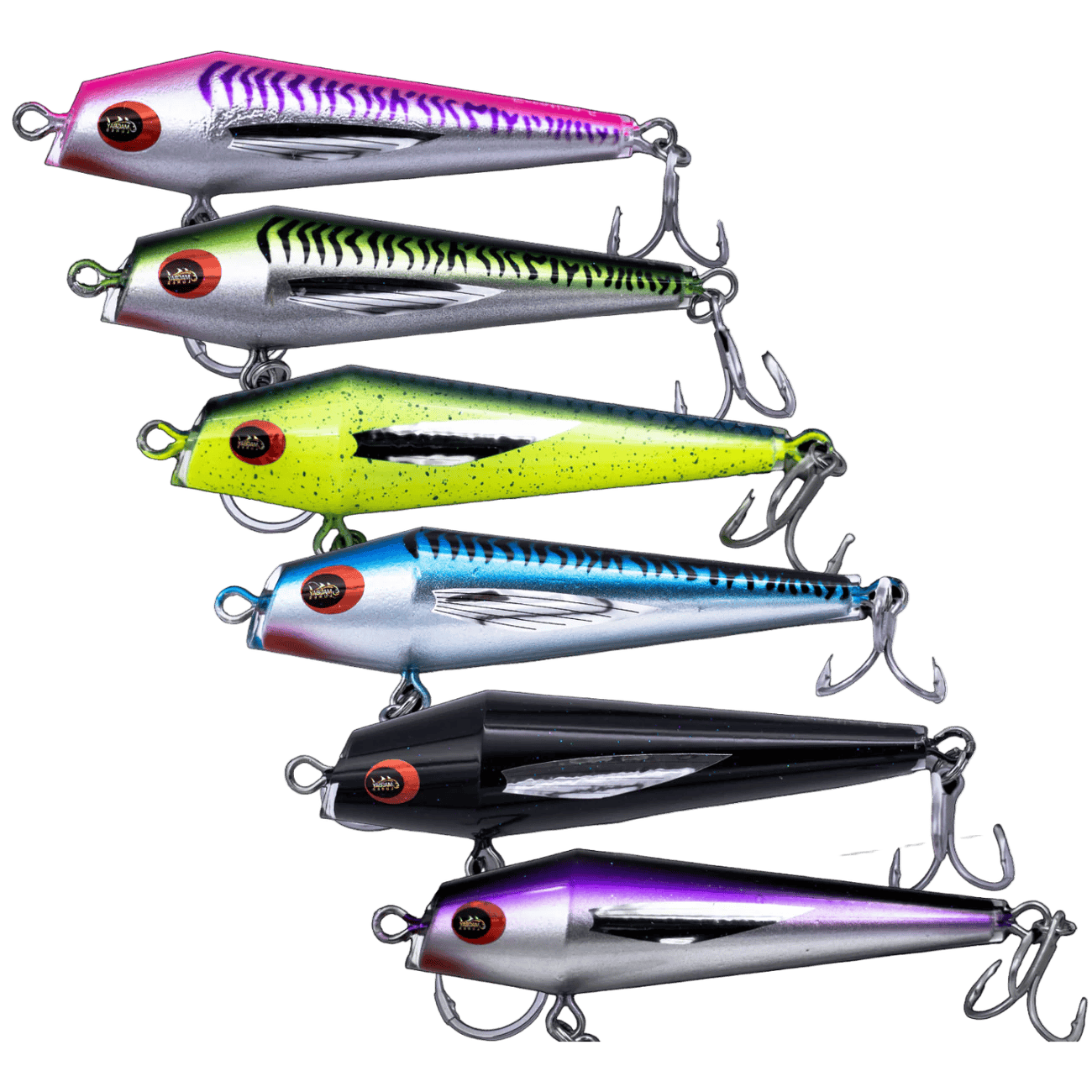
The best wahoo lures are built specifically to handle speed without losing their action. They track straight. They stay balanced. They don’t wash out when the boat pushes harder.
Depth Matters More Than Most People Think
Wahoo are not always on the surface. In fact, they often sit lower in the column, waiting to intercept.
If every lure in your spread is running shallow, you’re narrowing your chances. Planers and weighted heads help get baits down where they need to be. The difference between a surface strike and a deep strike can simply be ten feet of depth.
This is where lure head design becomes important. Some shapes create a tighter, more aggressive action. Others produce a smoother swim at depth. Choosing the wrong style for the depth you’re targeting can mean pulling clean water all day.
It’s not just about what looks good in the tackle shop. It’s about how it behaves at speed and depth under pressure.
Color Isn’t Random
There’s a lot of debate around color selection offshore. But with Wahoo, contrast often wins.
Bold patterns. Sharp transitions. Colors that flash clearly in changing light. They don’t have time to study what they’re hitting. It’s reaction-based.
Dark over light combinations create silhouettes. Metallic finishes reflect flash at speed. High contrast skirts stand out when water clarity shifts.
That doesn’t mean you need a dozen color variations. It means you need colors that show up clearly at the speed you’re running.
Placement in the Spread Changes Everything
Two identical lures can perform completely differently based on where they’re positioned.
Short positions run in more prop wash and turbulence. Long positions track in cleaner water. Corner spots get more erratic action due to wake disturbance.
If you’ve ever had one rod get hit repeatedly while another stays silent, that’s not luck. It’s positioning.
Testing placement matters just as much as choosing the lure itself. Sometimes, the difference between a slow day and a productive one is simply moving a proven lure to a better lane.
Hardware Can’t Be an Afterthought
Wahoo hit hard. They also have teeth that don’t forgive mistakes.
Leaders need to be solid. Hooks need to be sharp and strong enough to handle violent strikes at high trolling speeds. Cheap components fail at the worst possible moment.
A lure can have the perfect action and still cost you fish if the hardware doesn’t hold.
This is one reason serious offshore anglers lean toward brands known for durability. Brands like Magbay Lures have built a reputation around high-speed stability and strong construction, which matters when you’re pulling heavy gear at aggressive speeds.
You don’t get many second chances with Wahoo. Your gear has to be ready on the first hit.
Reaction Beats Realism
A common mistake is trying to make everything look perfectly natural.
Wahoo isn’t analyzing scale patterns. They’re reacting to motion. Sudden bursts. Tight wiggles. Flash that looks like panic.
Sometimes a lure that feels slightly aggressive outperforms one that looks more realistic. Erratic movement triggers instinct.
That’s why testing different head shapes and skirt combinations matters. Some days they want tight vibration. On other days, they respond better to wider movement.
It’s not about matching bait exactly. It’s about triggering a split-second decision.
Fine-Tuning Over Time
Successful wahoo anglers rarely change everything at once. They tweak one variable at a time.
Patterns emerge when you pay attention. Maybe your deeper line consistently gets strikes at nine knots. Maybe a certain color works better when the water shifts green instead of blue.
The more you refine, the less random your results feel.
Final Thoughts
Wahoo fishing is fast, deliberate, and unforgiving. They won’t reward sloppy spreads or unstable gear. But when everything lines up, the strike is immediate and aggressive.
Choosing the right lure isn’t about hype. It’s about performance at speed, depth control, and durability under pressure.
If you build your spread with intention and use gear designed specifically for high-speed offshore trolling, your chances improve dramatically.
