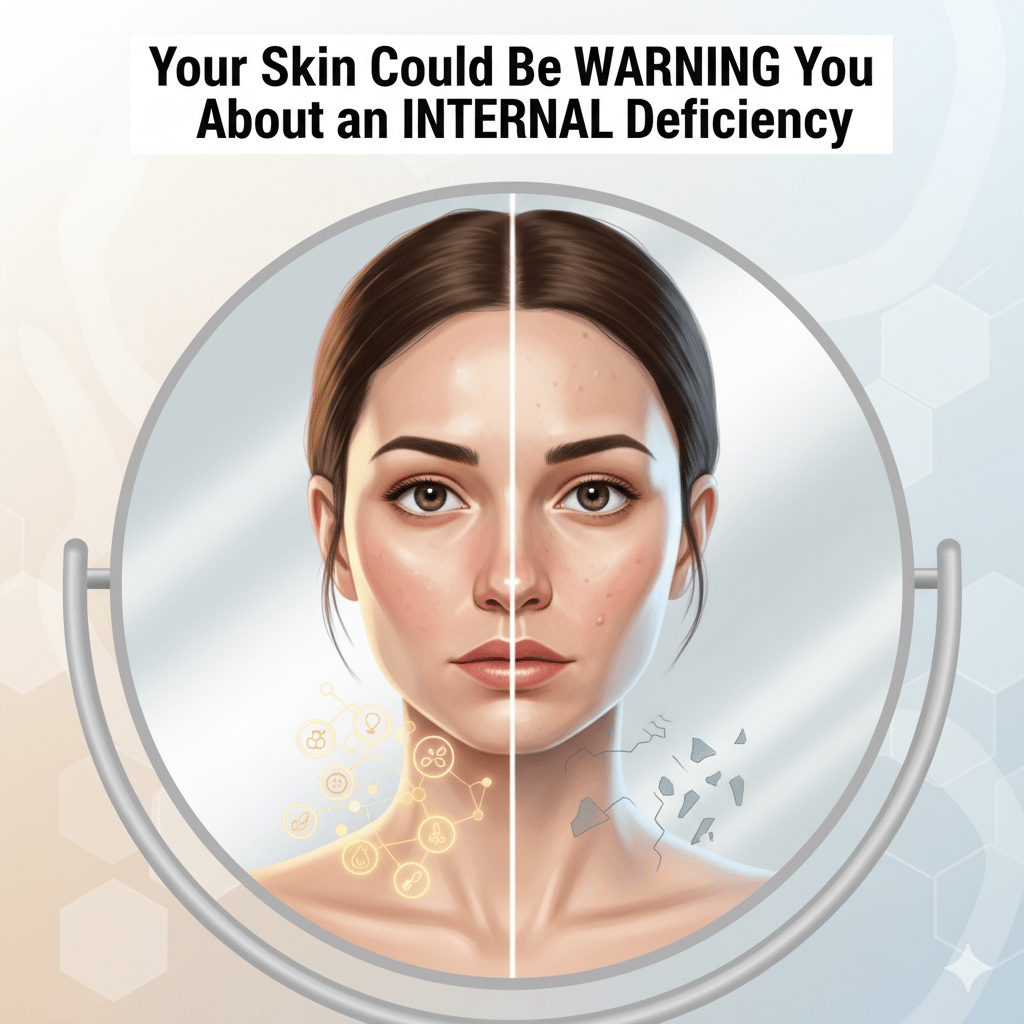
We often think of our skin as a reflection of how well we take care of it through cleansers, moisturizers, and serums. But what if your skin is actually trying to tell you something deeper? Sometimes, the texture, color, or condition of your skin isn’t just about external care it can be a sign of what’s happening inside your body. Your skin can reveal clues about internal deficiencies that might need your attention.
The skin is the largest organ of the human body, and it’s surprisingly intelligent. It reacts to hormones, diet, hydration, and most importantly, nutrient balance. When the body lacks certain vitamins or minerals, the skin often shows early warning signs from dryness and dullness to rashes and slow healing. Ignoring these signs might mean missing your body’s call for help. Let’s look at some common skin changes and what internal deficiencies they could be linked to.
1. Dry, Flaky, or Rough Skin Possible Vitamin A or E Deficiency
If your skin feels unusually dry or rough, no matter how much moisturizer you use, your diet might be lacking in Vitamin A or Vitamin E. Vitamin A helps in skin repair and the production of new cells. Without it, your skin may look dull, scaly, or even itchy. Vitamin E, on the other hand, protects skin cells from damage caused by free radicals and keeps the skin soft and hydrated.
What to do: Eat foods rich in these vitamins, like carrots, spinach, eggs, almonds, sunflower seeds, and avocados. A blood test can also confirm if you have a deficiency.
2. Cracked Lips and Corners of the Mouth B Vitamin Deficiency
Painful cracks or sores around your lips or mouth corners could mean your body needs more B vitamins, especially B2 (riboflavin), B3 (niacin), or B12. These vitamins are crucial for maintaining healthy skin and mucous membranes. A lack of them can lead to inflammation and peeling around the lips.
What to do: Add foods like whole grains, dairy products, lean meats, and leafy greens to your diet. Vegans and vegetarians should pay special attention to Vitamin B12 levels, as it’s mainly found in animal products.
3. Pale or Yellowish Skin Iron or Vitamin B12 Deficiency
A sudden loss of skin color or a yellowish tint could indicate anemia, often caused by low iron or Vitamin B12 levels. These nutrients help your body produce healthy red blood cells that carry oxygen. When your body doesn’t get enough, your skin may appear pale, tired, or slightly yellow.
What to do: Include iron-rich foods such as red meat, lentils, spinach, and fortified cereals. Pair them with Vitamin C-rich foods (like oranges or bell peppers) to boost iron absorption. For B12, consider eggs, fish, and dairy or supplements if recommended by your doctor.
4. Acne or Oily Skin Zinc Deficiency
Zinc plays a major role in regulating oil production and skin inflammation. A deficiency can lead to increased acne, slow healing, or redness.
What to do: Eat zinc-rich foods like chickpeas, nuts, pumpkin seeds, and seafood. Zinc supplements can also help but should be taken under medical advice.
5. Slow Wound Healing or Frequent Breakouts Vitamin C Deficiency
Vitamin C isn’t just for boosting your immune system it’s also vital for collagen production, which keeps your skin firm and helps wounds heal faster. A deficiency can cause your skin to bruise easily, heal slowly, or appear dull and rough.
What to do: Eat citrus fruits, strawberries, bell peppers, and broccoli. A simple increase in Vitamin C intake can dramatically improve skin texture and glow.
6. Red, Itchy Rashes or Eczema Essential Fatty Acid Deficiency
Essential fatty acids like omega-3 and omega-6 help maintain the skin’s natural barrier and hydration levels. Without them, your skin might become dry, irritated, or inflamed, leading to eczema-like symptoms.
What to do: Add healthy fats to your diet. Salmon, flaxseeds, chia seeds, and walnuts are great sources. Also, stay hydrated, as dehydration can worsen these symptoms.
7. Pigmentation or Dark Spots Vitamin B12 or Folate Deficiency
Unexplained dark patches or hyperpigmentation could point to Vitamin B12 or folate (Vitamin B9) deficiency. These vitamins are essential for cell regeneration and DNA repair. Their shortage can cause uneven skin tone or darkened areas, especially in darker skin tones.
What to do: Eat eggs, dairy, and green vegetables like spinach and kale. If you follow a plant-based diet, consider a B12 supplement after consulting a doctor.
8. Hair Thinning and Skin Dullness Protein Deficiency
Protein is the foundation of collagen and keratin, two essential components for healthy skin, hair, and nails. When your body doesn’t get enough protein, you may notice thinning hair, sagging skin, or a loss of elasticity.
What to do: Include eggs, fish, lentils, beans, and lean meats in your daily meals. If you’re a vegetarian, focus on plant-based protein sources like tofu, quinoa, and chickpeas.
When to Get Tested
While your skin can offer strong clues, it’s not a diagnosis on its own. If you’ve noticed persistent changes in dryness, discoloration, rashes, or slow healing, it’s wise to get a blood test to check your vitamin and mineral levels. Many labs, like Chughtai Lab on Instacare.pk, offer convenient health panels that can detect deficiencies early.
Get your vitamin and mineral tests done at Chughtai Lab
The Bottom Line
Your skin does more than make you look good it reflects your inner health. Every rash, dryness, or spot can be your body’s way of saying, “Something’s missing.” Listening to these signs and making small dietary or lifestyle changes can make a big difference not only for your skin but for your overall well-being. So next time your skin seems “off,” don’t just reach for another cream. Maybe it’s time to feed your skin from within.
